

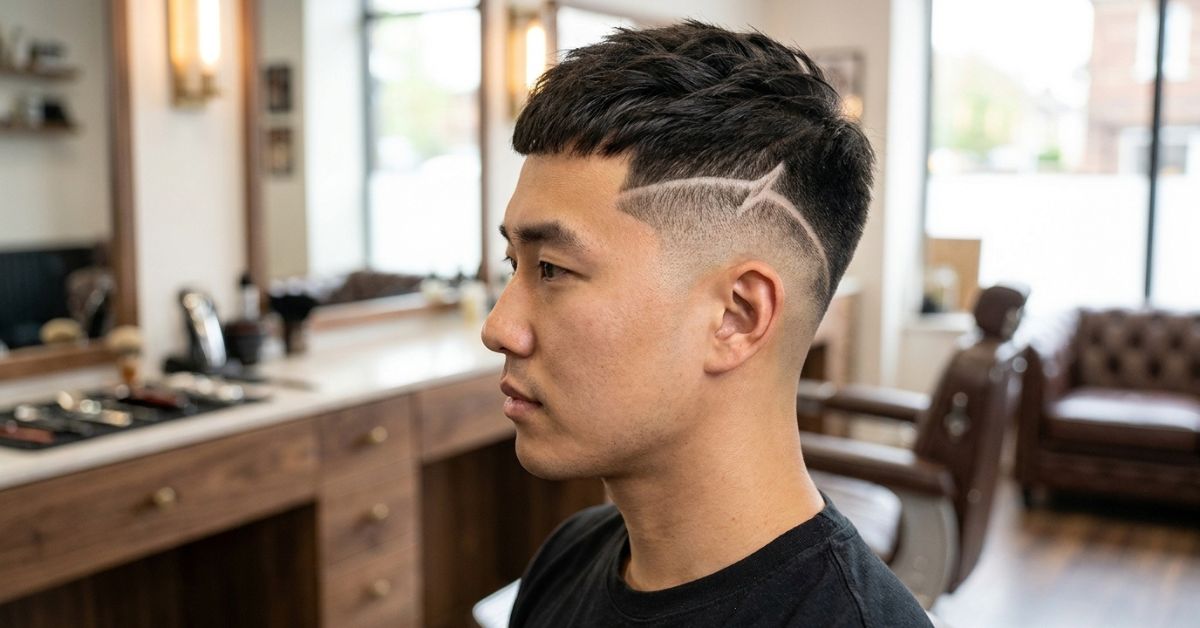
A plain fade is sharp. A high taper fade with a razor design is a statement. If you’re tired of walking into the barbershop and asking for “the same thing, just shorter,” this guide gives you 28 real design options, plus the details barbers actually need to execute them correctly: hair type pairing, face shape matching, placement zones, and how long the artwork stays crisp.
By the end, you’ll be able to describe exactly what you want instead of scrolling through fifty Pinterest tabs on your phone while your barber waits.
What Is a High Taper Fade With Design?
A high taper fade with design is a men’s haircut where the fade begins above the temple line and blends down into short, skin-close sides, while a razor-etched pattern is carved into the faded section. The design can be a single straight line, a geometric shape, or a full freestyle piece, depending on how much detail you want and how skilled your barber is with a straight razor.
The “high” part refers to where the fade starts. Instead of beginning at the ear (a low fade) or the middle of the head (a mid fade), the fading action starts higher up, closer to the crown. This creates more visible skin and blended space, which gives a design room to breathe.
Razor art itself isn’t new. Barbers have been shaving lines and patterns into fades since the late 1980s, largely within Black barbershop culture, and the trend has only grown as clippers, trimmers, and razor technique have improved. What used to be a single line near the temple has evolved into full geometric grids, portrait-style shading, and freehand artwork.
Three things define this haircut:
- The fade starts above the temple, not at the ear or neckline.
- The design sits in one of three zones: the temple, the side, or the nape.
- Simple line work requires less skill than freestyle patterns, so pricing and appointment time can vary a lot between barbers.
28 High Taper Fade Design Ideas
Not every design needs the same skill level, tools, or sitting time. Below, the 28 ideas are grouped by complexity so you can match your ask to your barber’s experience and your own patience for upkeep.
Simple Designs
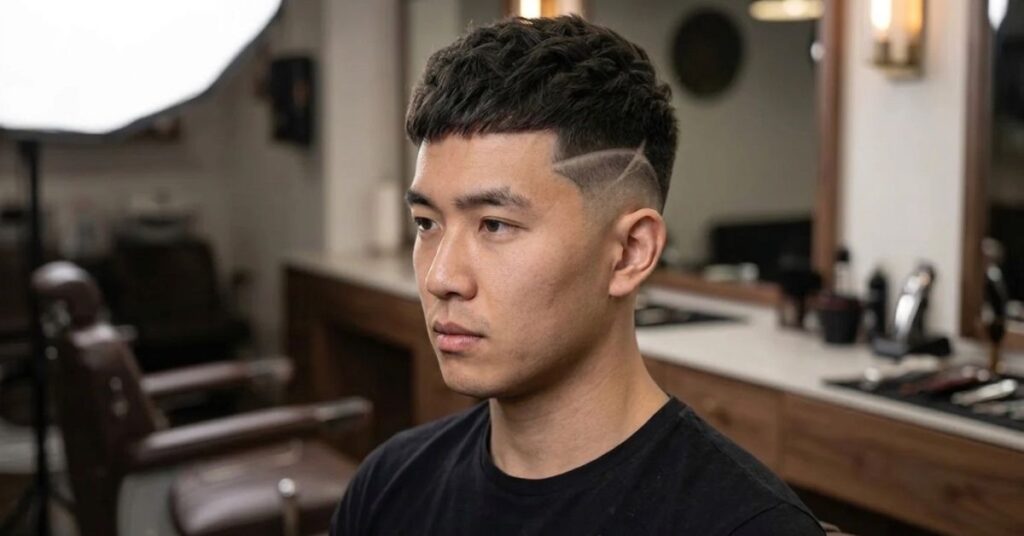
These take the least time in the chair and are the easiest to maintain because there’s less shaved surface area to grow out unevenly.
- Single Temple Line. One clean, straight line above the temple. The most requested design worldwide and a safe starting point if you’ve never had razor work done before.
- Double Parallel Lines. Two thin lines running side by side, usually curved slightly to follow the hairline.
- Side Part Line. A shaved line that mimics a hard side part, giving the illusion of a defined part even with a shorter cut.
- Curved Temple Fade Line. A single line that follows the natural curve of the skull instead of running straight.
- Thin Nape Line. A subtle line at the back of the neck, ideal for men who want a hint of detail without it being visible from the front.
- Zigzag Line. A simple angular zigzag replacing the standard straight temple line.
- Arrow Point. A short arrow shape pointing toward the ear or hairline.
- Single Star. A small, clean star shape shaved just above the ear.
- Lightning Bolt. A quick, sharp zigzag resembling a bolt, popular for a bold but low-commitment look.
Intermediate Geometric Designs

These require a barber comfortable with straight edges, symmetry, and shading, and they usually add 10 to 20 minutes to the appointment.
- Triangle Grid. A series of small connected triangles along the temple fade.
- Diamond Pattern. Repeating diamond shapes cut into the side, often paired with a skin fade underneath.
- Cross-Hatch Lines. Multiple intersecting lines that create a woven, grid-like texture.
- Half-Moon Cutout. A curved crescent shape shaved near the temple.
- Compass Star. A four or eight-point star design, similar to a compass rose.
- Chevron Stripes. Angled V-shaped stripes stacked in a row.
- Spiral Shape. A tight spiral etched into the fade, requiring precise razor control.
- Hexagon Cluster. Small connected hexagons, often used as a nod to honeycomb or geometric art styles.
- Wave Pattern. Smooth S-curves that mimic ocean waves, popular for both straight and curly hair textures.
- Fade-Within-a-Fade. A shape that has its own mini gradient inside it, blending from skin to light stubble.
Advanced Freestyle Designs

These are the most time-intensive and typically only offered by barbers who specialize in razor art. Expect 30 minutes or more added to a standard cut.
- Portrait Etching. A recognizable face or figure shaved into the side, usually reserved for barbers with fine art training.
- Team Logo or Emblem. A sports team crest, brand logo, or symbol recreated in the fade.
- Custom Initials. Your initials or a loved one’s initials shaved in script or block lettering.
- Tribal Pattern. Bold, flowing shapes inspired by tribal tattoo art.
- Animal Silhouette. A simplified animal outline, common choices include lions, wolves, and birds.
- Multi-Line Freestyle. A combination of angles, curves, and shapes with no fixed template, built around negative space.
- 3D Shadow Effect. Layered shading that creates the illusion of depth within a flat design.
- Text or Word Design. A short word or phrase shaved in a custom font.
- Signature Custom Design. A one-of-a-kind piece built around a personal symbol, abstract shape, or idea unique to you, planned out with your barber before the razor touches your head.
Best Designs for Your Hair Type
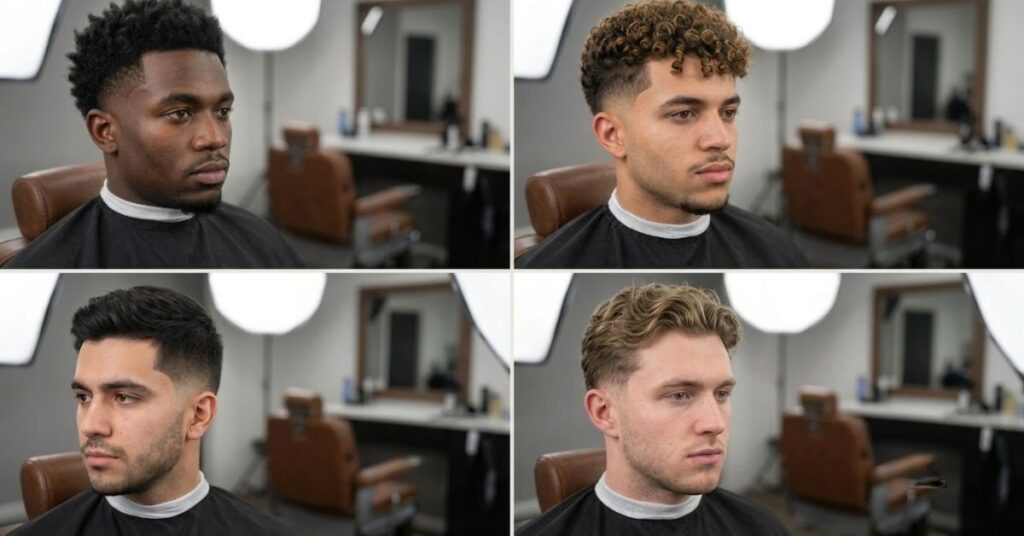
Hair texture changes how visible and how long-lasting a design will look, so matching the right style to your hair type matters as much as picking a design you like.
- Straight hair shows off clean lines and sharp geometric shapes the best. Simple temple lines, chevrons, and grid patterns read clearly because there’s no natural texture competing with the pattern.
- Wavy hair softens hard edges slightly, which works well with curved lines, wave patterns, and half-moon cutouts.
- Curly hair pairs best with bolder, thicker designs like diamond patterns or tribal shapes, since fine single lines can get lost in the surrounding curl texture.
- Coily hair benefits from wider negative space and simpler shapes. A freestyle multi-line design with generous spacing tends to hold up better than tightly packed detail.
- Thick or coarse hair can support almost any design, including freestyle and portrait work, because there’s more contrast between the shaved area and the longer top.
- Fine or thin hair looks sharpest with simple to intermediate designs. Overly complex patterns can appear cluttered against thin strands.
Which Design Suits Your Face Shape?
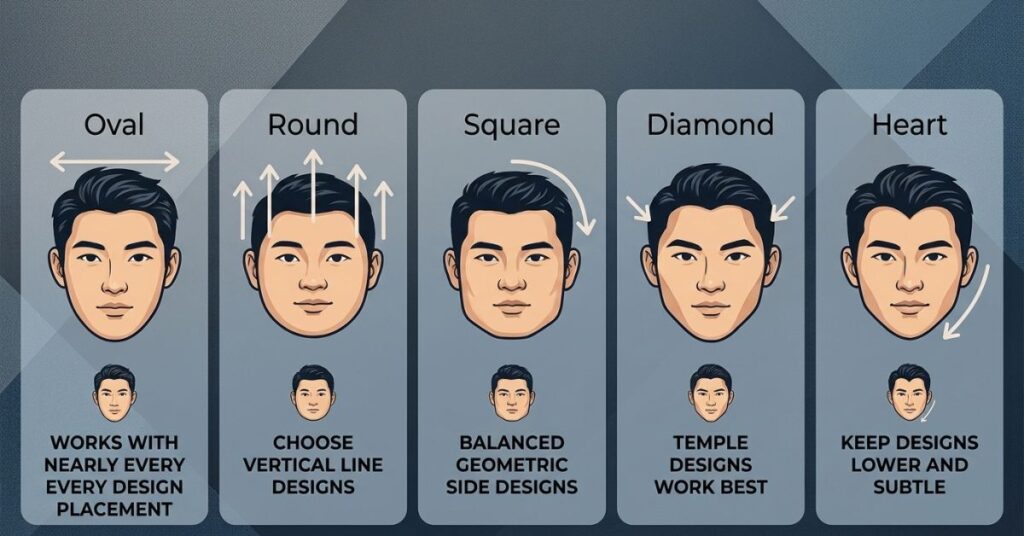
Placement and direction of a design can soften or sharpen your natural facial proportions, so it’s worth thinking about your face shape before committing to a pattern.
- Oval face: Nearly every design works here. Both temple and nape placements sit well, so this is the most flexible face shape for bold or complex patterns.
- Round face: Angular designs, like chevrons or triangle grids, add structure and visually sharpen soft curves.
- Square face: Curved lines and wave patterns soften a strong jawline without fighting against it.
- Diamond face: Vertical lines or narrow freestyle designs elongate the face and balance wider cheekbones.
- Heart face: Simple, lower-placed designs near the temple draw attention downward and balance a wider forehead.
- Long face: Horizontal elements, like double parallel lines or chevron stripes, add width and break up vertical length.
Read More : Low Taper Blowout: What It Is, Who It Suits, and How to Ask Your Barber
How Complex Can Your Design Be?
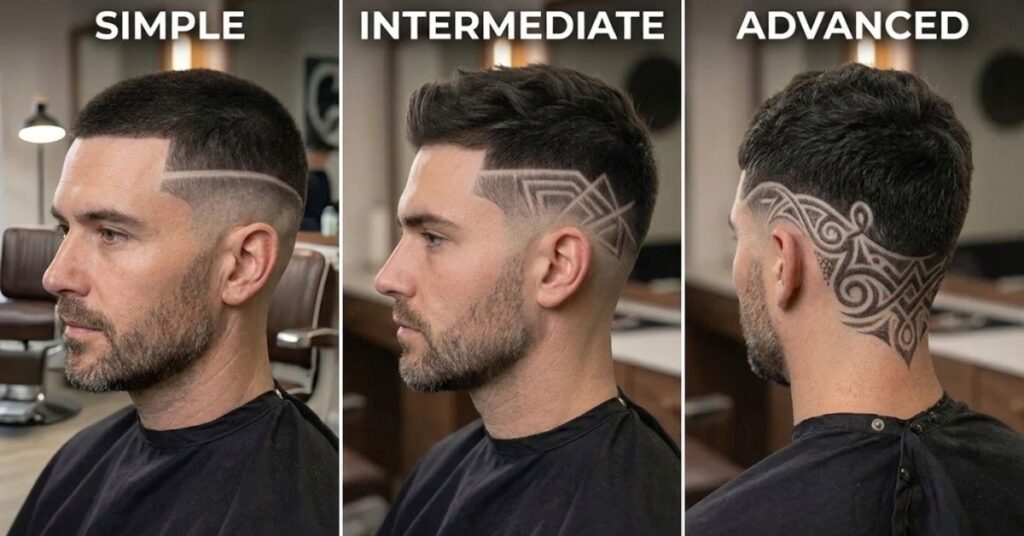
Complexity should match three things: your barber’s skill level, how much time you have to sit in the chair, and how often you’re willing to get touch-ups.
Most barbers who work regularly with fades can execute a single clean line with no issue. Fewer barbers specialize in freestyle or portrait-level razor art, so it’s worth checking a barber’s portfolio or Instagram before requesting anything past the intermediate tier. A simple design usually takes 5 to 10 extra minutes. Intermediate geometric work adds 10 to 20 minutes. Freestyle and portrait pieces can add 30 minutes to an hour, depending on detail.
If this is your first time getting a design, start with something from the simple tier. It’s easier to build up to a freestyle piece later than to fix a botched complex design.
Where Should the Design Go?
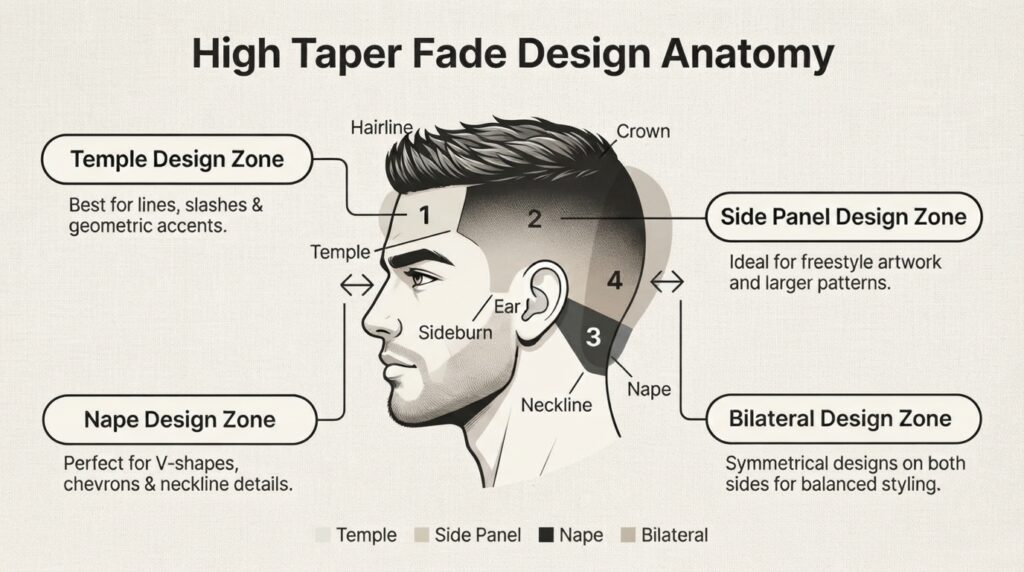
Designs generally sit in one of three zones, and each placement gives a slightly different visual effect.
- Temple placement is the most common and visible zone, sitting right where the fade meets the hairline. It’s ideal for line work, small geometric shapes, and anything you want people to notice immediately.
- Side placement sits further back, above the ear, and works well for larger patterns like grids, spirals, or freestyle art that needs more surface area.
- Nape placement is the most discreet option, located at the back of the neck. It’s a good choice for anyone who wants a personal design (like initials or a meaningful symbol) without it being visible from the front.
How to Tell Your Barber What You Want
Miscommunication is the number one reason a design doesn’t turn out the way a client imagined. A few steps make the conversation easier for both sides.
- Bring a reference photo. Even a rough sketch or screenshot narrows the gap between what you’re picturing and what your barber hears.
- Name the zone. Say “temple,” “side,” or “nape” instead of just pointing vaguely.
- Describe complexity honestly. If you’re not sure whether your idea is simple or advanced, ask your barber directly: “Is this something you do often, or is it more advanced work?”
- Mention your hair type and how it typically grows. This helps your barber judge how long the design will stay sharp and how soon you’ll need a touch-up.
- Ask about negative space. A good design uses the space created by the fade rather than cramming a shape into too small an area. Trust your barber’s input here; they can see the canvas better than you can in a mirror.
How Long Does the Design Last?
A high taper fade with design typically stays sharp for 1 to 2 weeks before the lines start to soften, which is faster than a plain fade because shaved detail grows out more visibly than a simple blend. Fast hair growth can blur fine lines in as little as 7 to 10 days, while slower growers might stretch closer to 3 weeks before a touch-up is needed.
Simple single-line designs are the easiest to maintain since there’s less edge to keep crisp. Freestyle and portrait pieces need the most frequent touch-ups, sometimes weekly, to preserve fine detail and shading.
A few habits extend the life of a design between visits:
- Avoid rubbing or scratching the shaved area, which can cause irritation and blur fine lines.
- Keep the scalp moisturized to prevent dryness and flaking that make lines look less defined.
- Ask your barber to show you how to touch up the outer edge of the design at home with a detailer, without going near the pattern itself.
How to Style This Haircut
The top of the haircut should complement the design rather than compete with it. A few styling principles keep the whole look balanced.
- Keep the top textured but not overly heavy, since a design already adds visual detail on the sides.
- Use a lightweight product like matte pomade or texture clay so the top doesn’t look greasy next to the crisp, dry lines of the design.
- Blow-dry with a diffuser or finger-style curls if you have natural texture, letting the top add movement while the sides stay clean.
- For straight hair, a light gel or cream keeps the top structured without overpowering the shaved detail.
Best Top Styles to Pair With It
Certain top styles naturally frame a design better than others.
- Textured crop: Short, choppy layers that keep focus balanced between the top and the design.
- Messy quiff: Adds height and volume, especially effective with temple placement designs.
- Natural curls or coils: Left longer on top, this contrasts nicely with geometric or freestyle side patterns.
- Slick back: A cleaner, more formal option that lets a subtle nape or side design show through.
- Fringe or blunt bangs: Works well with bold designs, since the fringe draws the eye forward while the pattern adds detail at the sides.
Read More : Low Taper Fade for Kids & Boys: 15+ School-Safe Styles, Barber Tips & Complete Parent Guide (2026)
Mistakes to Avoid With This Cut
A few common errors turn a great design into a regret, so it helps to know what to watch for before you sit in the chair.
- Choosing a design too complex for a first-timer. Start simple and build confidence in your barber’s skill before requesting freestyle work.
- Ignoring face shape. A design that clashes with your natural proportions can look unbalanced no matter how well it’s executed.
- Skipping touch-ups. Waiting too long between visits lets the design blur into an unrecognizable shape.
- Not bringing a reference. Verbal descriptions alone often lead to a different result than what you imagined.
- Overcrowding the space. Too much detail packed into a small area looks cluttered instead of clean; negative space matters.
- Choosing a barber without a design portfolio. Not every barber who does fades well is equally skilled with a razor. Check before booking, especially for advanced designs.
Frequently Asked Questions
How much does a high taper fade with design cost?
Simple line designs usually add $5 to $15 to a standard fade, while freestyle or portrait work can add $20 to $50 or more depending on the barber’s skill level.
Can I get a design with any hair length on top?
Yes, designs work with short crops, medium quiffs, and longer curly or textured tops, since the pattern lives entirely in the faded section.
Does a design work on all hair colors?
Yes, though designs show the most contrast on darker hair, since the shaved skin creates a sharper visual difference against the surrounding strands.
Will the design hurt my hairline?
No, a razor design doesn’t affect hair growth or damage the hairline when done by a trained barber using proper technique.
Can I remove or change a design later?
Yes, most designs simply grow out within a few weeks, or your barber can shave the area down further to start a new pattern sooner.
Is a high taper fade with design appropriate for work?
It depends on your workplace. Simple, subtle designs like a single temple line are generally more professional than bold freestyle or text-based patterns.
How do I find a barber who specializes in designs?
Check a barber’s Instagram or portfolio for close-up shots of previous razor work, and ask directly how often they do design requests.
Read More : Blowout Taper for Curly Hair: What to Ask Your Barber + How to Style It
Final Thoughts
A high taper fade with design turns a routine haircut into something that actually reflects your personality, whether that’s a single confident line or a full freestyle piece built around a personal symbol. The key is matching the design’s complexity to your hair type, face shape, and how often you’re realistically willing to book touch-ups. Bring a clear reference, communicate the placement you want, and trust your barber’s read on negative space. Start simple if you’re new to razor work, and let the design grow from there.

Marco Silva is a fashion writer and content creator at Faxhion Purly, sharing practical insights on clothing, styling, fashion trends, and personal style. With a focus on research and clear communication, Marco creates reader friendly articles designed to help fashion enthusiasts discover useful ideas, understand trends, and make informed style choices.