


A blowout taper for curly hair combines a precision-tapered fade at the sides with a volumized, diffuser-styled curly top. The cut works on Type 3 wavy-to-curly and Type 4 coily hair. The taper position low, mid, or high controls contrast and maintenance frequency. The single detail that makes or breaks this cut on curly hair is telling your barber to cut the top dry, not wet.
This guide covers every decision you need to make before your next barbershop visit. You’ll learn how the cut looks on different curl types, which taper height fits your hair and lifestyle, and the exact words to use with your barber. You’ll also get a full styling routine for keeping your curls sharp between cuts.
What is a low taper blowout?
A low taper blowout is a men’s haircut that pairs a gentle, low-starting taper on the sides and back with a full, lifted top. The fade barely shows above the ears and neckline, while the top gets blow-dried upward and outward for height, movement, and volume.
What Is a Low Taper Blowout?
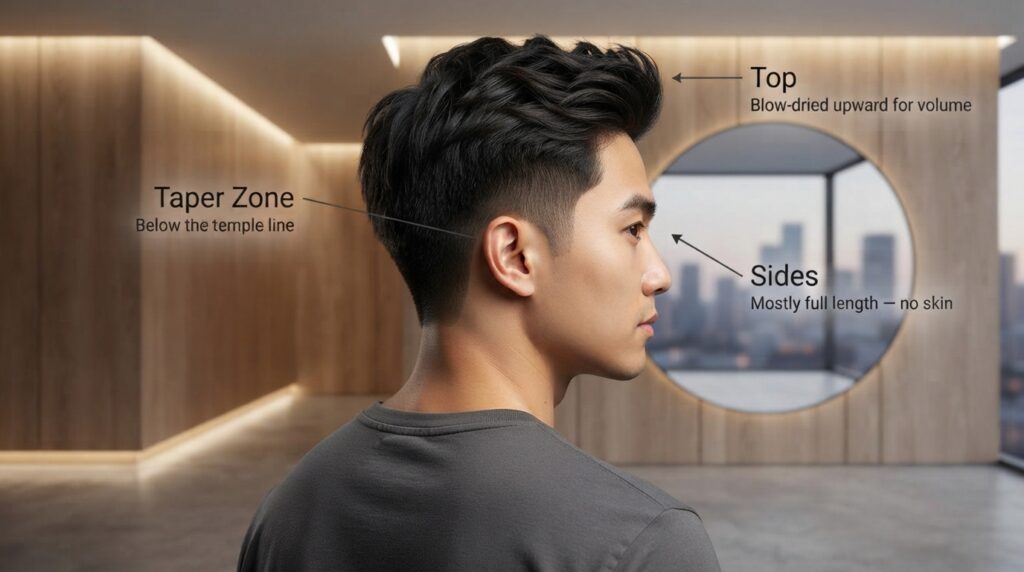
The low taper blowout has become one of the most requested cuts in barbershops over the past two years, and for good reason. It blends a barely-there taper with a voluminous, textured crown, giving you a shape that looks intentional without looking overworked.
Unlike a fade, which creates a crisp gradient from skin to hair, a taper works with a much softer transition. The sides stay close to the head, but you rarely see bare scalp. That subtlety is the whole appeal. It reads as “put together” rather than “just got a haircut.”
The word blowout refers to the styling method, not just the shape. A round brush and blow dryer are used to lift the roots and push the top hair away from the scalp, creating natural-looking height and shape that gels and pomades alone cannot replicate.
What Does a Low Taper Blowout Look Like?
Picture short, neat sides that fade gradually just above the ear and around the neckline, transitioning into a top that has real lift, body, and shape. The top is usually left two to four inches long, long enough to move but short enough to hold its shape through the day.
The finish depends on hair type, but the goal is consistent across the board: a rounded, lifted silhouette on top with clean, low contrast on the sides. Think soft edges rather than sharp lines, and volume that looks natural rather than sprayed into place.
Most versions keep a slight taper at the temples too, so the whole head flows into the hairline without any harsh boundary lines.
Low Taper Blowout vs. Low Taper Fade: What Is the Real Difference?
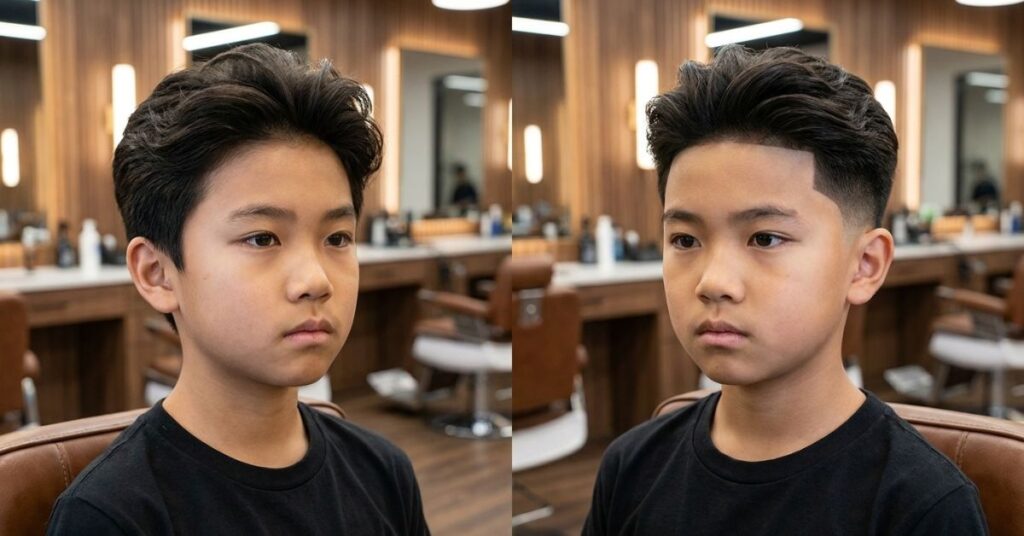
This is the comparison most people search for, and the answer comes down to contrast and maintenance.
- A low taper fade creates sharper, more visible contrast between the sides and the top, and the fade line is usually cut closer to the skin near the bottom.
- A low taper blowout keeps that contrast softer. The sides are trimmed down but rarely skin-tight, so the whole cut looks more blended and less “cut.”
- Fades tend to need a touch-up sooner because the sharp line grows out visibly within two to three weeks.
- Blowouts grow out more gracefully since there is no hard line to maintain, making them a better fit for guys who cannot get to the barbershop every couple of weeks.
If you want something sharp and high-contrast, ask for the fade. If you want something relaxed that still looks deliberate, the blowout taper is the better call.
Read More : Low Taper Fade for Kids & Boys: 15+ School-Safe Styles, Barber Tips & Complete Parent Guide (2026)
Is a Low Taper Blowout the Same as a Low Taper Fade?
No, they are related but not identical. Both start low near the neckline and ears, but a fade blends all the way down to the skin at some point, while a taper never gets that short. Many barbers use the terms loosely, so it always helps to clarify which finish you want before the clippers come out.
Does a Low Taper Blowout Work With Your Hair Type?
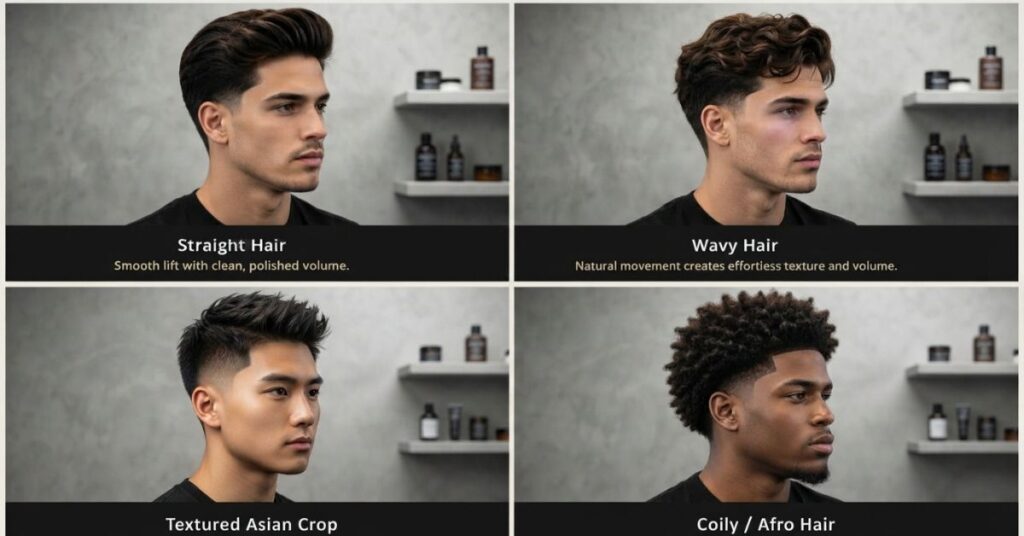
One of the biggest strengths of this haircut is how adaptable it is. Nearly every hair type can pull it off, but the styling approach and end result change quite a bit depending on your natural texture.
Straight Hair: How to Get Real Volume Without the Mushroom Effect
Straight hair is the trickiest texture for this cut simply because straight strands have less natural grip and tend to fall flat quickly. Without the right technique, a blowout on straight hair can end up looking rounded and heavy, sometimes called the mushroom effect.
To avoid that, ask your barber for texturizing or point cutting on top rather than a blunt, uniform length. This removes weight and gives the blow dryer something to actually lift. At home, a light sea salt spray or texture powder applied at the roots before blow-drying gives straight hair the grip it needs to hold height.
Wavy Hair: The Path of Least Resistance
Wavy hair is arguably the easiest texture to work with for a low taper blowout. It already has natural movement and enough grip to hold volume without much product. A round brush lifts the roots while the natural wave pattern does the rest, creating soft, effortless texture on top.
A light mousse or curl cream applied to damp hair before blow-drying enhances the wave pattern without weighing it down.
Curly Hair: The Most Visual Payoff of Any Texture
Curly hair delivers the most dramatic, full-bodied result of any texture. Curls naturally hold shape and volume, so the top of the cut looks fuller and rounder with less effort. A diffuser attachment on the blow dryer is the key tool here, since it dries curls gently without disrupting the natural curl pattern or causing frizz.
Curl cream or a leave-in conditioner applied to soaking wet hair, followed by diffusing on low heat, keeps the curls defined and bouncy rather than frizzy.
Coily / Afro Hair: Volume Built In, Shape Is the Job
Coily and afro textures already come with built-in volume, so the real work for the barber is shaping that volume into a rounded, controlled silhouette rather than creating lift from scratch. The taper on the sides keeps everything grounded while the top is picked out and shaped for a clean, structured dome.
Because this texture holds shape so well, coily and afro low taper blowouts tend to need the least daily styling of any hair type, just a light oil or curl butter to keep definition and shine.
What Face Shapes and Lifestyles Does It Suit?
The low taper blowout works well across most face shapes because the volume on top and the soft taper on the sides can be adjusted to balance proportions.
- Round faces benefit from extra height on top, which visually elongates the face.
- Square and angular faces look great with this cut because the softness of the taper balances a strong jawline.
- Oval and oblong faces have the most flexibility and can wear the top shorter or fuller depending on preference.
- Guys with active or professional lifestyles like this cut because the low taper grows out cleanly, meaning fewer barbershop visits without the style falling apart.
How Do You Ask Your Barber for a Low Taper Blowout?
Communication makes or breaks this haircut, so it helps to be specific rather than just naming the style.
- Say you want a low taper, not a fade, and clarify you do not want the sides going to skin.
- Specify the guard number range for the sides, typically a #2 to #4 blended down toward the neckline.
- Tell your barber how much length you want left on top, usually two to four inches for a proper blowout.
- Mention your hair type and ask for texturizing or thinning on top if your hair is thick or straight.
- Bring a reference photo if possible, since “low taper blowout” can still mean different things to different barbers.
Being clear about maintenance expectations also helps. If you cannot get a trim every two weeks, say so, and your barber can leave slightly more length to grow out gracefully.
Guard Numbers for a Low Taper Blowout: What Do They Mean?
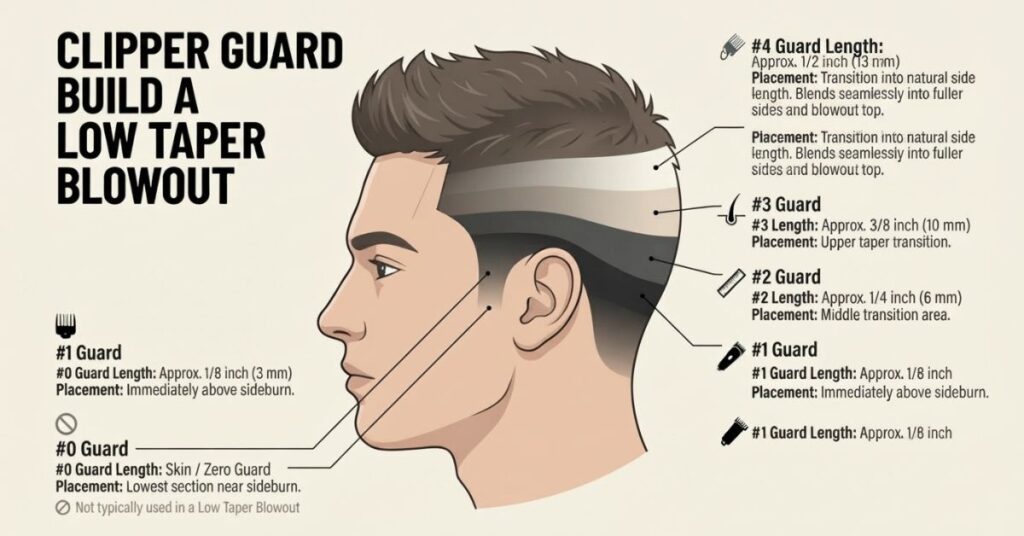
Clipper guards determine how much hair is left behind, and most barbers use a combination of them to build the taper.
| Guard Number | Length Left | Common Use in a Low Taper Blowout |
|---|---|---|
| #1 | About 1/8 inch | Blending near the neckline |
| #2 | About 1/4 inch | Lower sides and back |
| #3 | About 3/8 inch | Mid-taper blend point |
| #4 | About 1/2 inch | Upper sides before top hair begins |
A low taper typically starts around a #1 or #2 near the ears and neckline, then blends upward toward a #3 or #4 before meeting the longer top. Barbers may also use an open or closed taper lever on the clippers to fine-tune the blend between guard sizes, which is what creates that soft, gradual look rather than visible steps.
How Do You Style a Low Taper Blowout at Home?
- Start with damp, not soaking wet, hair for better control.
- Apply a volumizing mousse or texture spray at the roots.
- Use a round brush to lift the top hair against the direction of growth while blow-drying on a medium heat setting.
- Focus the airflow at the roots first, then work toward the ends for shape.
- Finish with a light matte paste or clay to lock in texture without weighing hair down.
- For curly or coily textures, swap the round brush for a diffuser to protect the curl pattern.
The whole process usually takes five to ten minutes once you get the technique down, and it gets faster with practice.
How Often Does a Low Taper Blowout Need a Trim?
Because the taper is soft rather than sharply defined, most guys can stretch trims to every three to five weeks without the style looking overgrown. This is one of the biggest advantages over a skin fade, which usually needs attention every two to three weeks to stay sharp. If you want to keep the shape extremely clean, a four-week schedule is the sweet spot for most hair types.
Low Taper Blowout Variations: Which Style Fits You?
Once you have the base cut down, there are several popular variations worth knowing before your next appointment.
Textured Fringe Low Taper Blowout
This version keeps the top slightly shorter and adds choppy, textured layers at the front for a piece-y, undone fringe. It pairs well with straight or wavy hair and works for both casual and semi-formal settings.
Edgar / Blunt Fringe Low Taper Blowout
The Edgar cut takes the same low taper but swaps the soft fringe for a straight, blunt-cut hairline across the forehead. It is bolder and more graphic, and it tends to suit thicker, straighter hair textures best.
Grown-Out / Longer Top Low Taper Blowout
For guys who want more length to work with, this variation keeps the taper the same but lets the top grow to four or five inches. It creates a fuller, more relaxed shape and gives you more styling versatility day to day.
Curly Afro Low Taper Blowout
This variation leans into natural curl or coil pattern instead of fighting it, keeping maximum volume on top while the low taper frames the sides. It is one of the lowest-maintenance versions since the natural texture does most of the work.
Perm Low Taper Blowout
Adding a perm to straight or wavy hair gives it the bounce and curl needed for a fuller blowout look without relying on daily styling. This has become increasingly popular for guys with straight hair who want the curly blowout aesthetic without waiting for a natural curl pattern to grow in.
Read More : Blowout Taper for Curly Hair: What to Ask Your Barber + How to Style It
What You Need Before Getting a Low Taper Blowout
- A clear idea of your current hair length, since very short hair needs a few weeks of growth before a proper blowout is possible.
- A reference photo that matches your hair type, not just a style you like the look of.
- A round brush and blow dryer at home if you plan to maintain the volume yourself between visits.
- A lightweight styling product suited to your texture, such as mousse for straight or wavy hair, or curl cream for curly and coily hair.
- Realistic expectations about maintenance, since even a low-maintenance taper still needs regular trims to hold its shape.
Frequently Asked Questions
Can I get a low taper blowout with thin hair?
Yes, though thin hair may need a light perm or texturizing product to hold volume through the day.
Does a low taper blowout suit older men?
Yes, the softer taper and natural volume work well at any age and tend to look less severe than a skin fade.
How long does hair need to be to start this cut?
Most barbers recommend at least two to three inches on top to create enough volume for a proper blowout.
Will a low taper blowout work for a receding hairline?
Yes, the volume on top can be styled to soften a receding hairline, though your barber may suggest a slightly different fringe shape.
Is a blow dryer required to maintain this style?
Not strictly, but a round brush and blow dryer make the biggest difference in achieving true lift and shape.
Can women get a low taper blowout?
The technique is unisex, though it is most commonly requested and styled for men’s short to medium hair.
Read More : Blowout Taper Fade: 35 Styles, Hair Type Guide, and Exact Barber Scripts (2026)
Key Takeaways
- A low taper blowout combines a soft, low-starting taper with a voluminous, blow-dried top for a look that is polished but not overdone.
- It differs from a low taper fade mainly in contrast and maintenance, with the blowout growing out more gracefully.
- Every hair type, from straight to coily, can wear this cut, though the styling technique and products change based on texture.
- Clear communication with your barber, including guard numbers and reference photos, makes a big difference in getting the result you want.
- Trims every three to five weeks are usually enough to keep the shape clean without constant upkeep.

Marco Silva is a fashion writer and content creator at Faxhion Purly, sharing practical insights on clothing, styling, fashion trends, and personal style. With a focus on research and clear communication, Marco creates reader friendly articles designed to help fashion enthusiasts discover useful ideas, understand trends, and make informed style choices.