


If your son has been begging for “the haircut all his friends have,” chances are he means a low taper fade. It’s become the go-to cut for boys of every age, from toddlers getting their first real trim to teens who want something sharp enough for school photos and relaxed enough for the playground.
This guide covers everything a parent actually needs: what a low taper fade is, which version suits your child’s hair type and face shape, how to talk to the barber without sounding lost, and how to keep the cut looking fresh between visits. No fluff, just the details that matter when you’re sitting in that barber chair with a wiggly kid.
What is a low taper fade for kids, and at what age can boys get one?
A low taper fade is a haircut where the hair gradually shortens near the hairline, ears, and neck, while most of the length stays intact on top. It’s considered the mildest and most school-friendly of the fade family. Most barbers agree it’s appropriate from around age 2 onward, once a toddler can sit reasonably still, though many parents wait until age 4 or 5 for a smoother first experience.
What Is a Low Taper Fade for Kids & Boys?
A low taper fade keeps the fading action close to the bottom of the head, roughly the last inch or two above the ears and at the nape of the neck. Unlike more dramatic fades, it doesn’t climb up the sides, so the overall silhouette stays fuller and more natural. That’s exactly why it works so well for kids: it looks tidy without looking severe.
How Does a Low Taper Fade Actually Work?
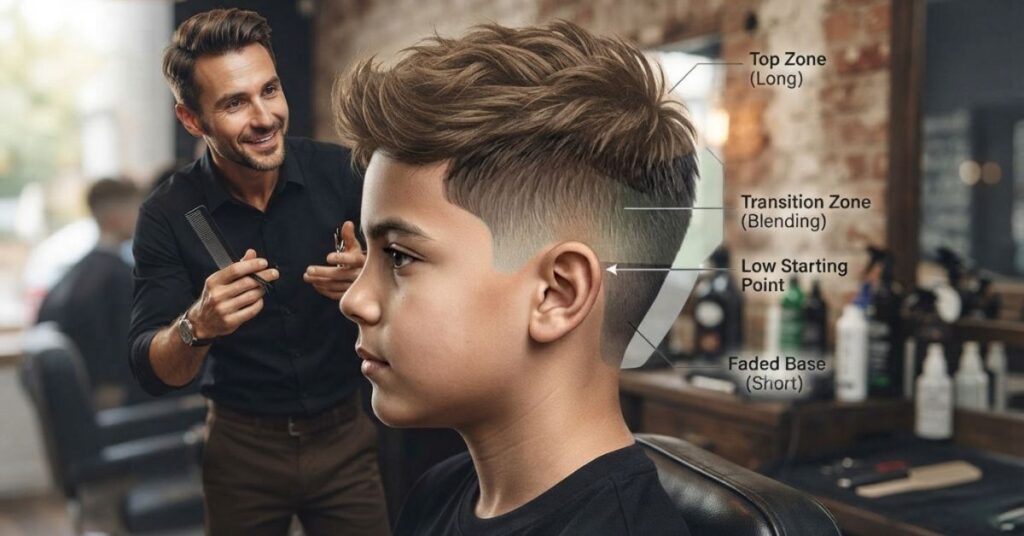
Barbers start with a guard length at the neckline, usually a 0.5 or 1, then blend upward through a series of slightly longer guards until the hair meets the length on top. The transition should be seamless, with no visible lines or steps. Good blending is what separates a clean low taper from a choppy one.
What Is the Difference Between a Taper and a Fade?
A taper gradually shortens hair but rarely goes down to bare skin. A fade goes further, blending hair all the way to the skin at some point. A “taper fade” combines both techniques, tapering through most of the head and fading only at the very bottom near the hairline.
What Makes the Low Taper Fade Different from Mid and High Fades?

The difference comes down to placement:
- Low taper fade: fading starts near the ears and neckline only
- Mid fade: fading starts around the temple, roughly halfway up the head
- High fade: fading starts near the top of the head, creating a bolder contrast
Low fades are the most conservative option, which is exactly why they’re the safest pick for school and family events.
Why Is the Low Taper Fade So Popular for Boys Right Now?
The TikTok Effect: How a Viral Meme Made Every Kid Want This Haircut
Short-form video trends have turned the low taper fade into a recognizable “cool kid” signal, with barbers filming transformation clips that rack up millions of views. Kids see the cut on creators, athletes, and older siblings, then bring screenshots straight into the barbershop.
Why Parents Love This Haircut Too
Beyond the trend factor, parents appreciate that it’s low maintenance, grows out gracefully instead of looking scraggly, and reads as neat enough for school without needing daily styling effort from a seven-year-old.
What Are the Best Low Taper Fade Styles for Kids & Boys in 2026?
1. Low Taper Fade with Textured Crop
Short, choppy layers on top paired with a subtle fade. Works with just a bit of texturizing paste, minimal daily effort.
2. Low Taper Fade with Curly Top
Natural curls left longer on top contrast beautifully against the clean sides. A favorite for boys who don’t want their curl pattern altered.
3. Low Taper Fade with Comb Over
A classic side part with length swept across the top. Reads polished for school portraits and family events.
4. Low Taper Fade with Pompadour
More volume and height at the front, styled up and back. Better suited to older boys who don’t mind a bit of product.
5. Low Taper Fade with Buzz Cut
The lowest-maintenance combination on this list. Great for active kids, swim season, or families who want fewer barber visits.
6. Low Taper Fade with French Crop
Short, blunt fringe across the forehead with textured sides. Currently one of the most requested boys’ styles among tweens.
7. Low Taper Fade with Mohawk / Faux Hawk
A bolder statement look, with length concentrated down the center. Best saved for schools with relaxed dress codes.
8. Low Taper Fade with Side Part
A hard or natural part combined with a low fade. One of the most versatile, dress-code-friendly options available.
9. Low Taper Fade with Afro Top (for Black Kids)
Keeps the natural afro texture on top intact while cleaning up the perimeter. Highlights healthy curl definition.
10. Low Taper Fade with Broccoli Cut
Rounded, textured curls on top that resemble the trending “broccoli” silhouette, finished with a soft low fade.
11. Low Taper Fade with Crew Cut
Short and uniform on top, blending into the fade. A timeless option that barbers can execute quickly.
12. Low Taper Fade with Slicked-Back Top
Top hair combed straight back with light gel, giving an older, sharper look for special occasions.
13. Low Taper Fade with Spiky Top
Short spikes styled upward with wax. Popular with younger boys who like a bit of personality without much length.
14. Low Taper Fade with Modern Mullet
Slightly longer at the back, shorter up front, blended into a low fade at the sides. A trend gaining traction among teens.
15. Low Taper Fade with 360 Waves (for Black Boys)
Requires brushing and a durag routine to build wave patterns, finished off with a clean low fade at the edges.
Read More : Blowout Taper for Curly Hair: What to Ask Your Barber + How to Style It
Which Low Taper Fade Works Best for Your Child’s Hair Type?

Low Taper Fade for Curly Hair Boys
Leave more length on top so curls can form naturally; ask the barber to avoid over-thinning, which can cause frizz.
Low Taper Fade for Straight Hair Boys
Straight hair shows blending lines more easily, so precision on the fade matters most here.
Low Taper Fade for Wavy Hair Boys
Wavy textures pair well with textured crops or comb-overs, since the natural movement adds shape without extra styling.
Low Taper Fade for Thick Hair Boys
Thinning shears on top help reduce bulk, keeping the style from looking heavy.
Low Taper Fade for Fine Hair Boys
Shorter top lengths work best, since fine hair can look flat if left too long.
Low Taper Fade for Black Kids (Afro / 4C Hair)
Pairing with afro tops, 360 waves, or twist styles preserves natural texture while the low fade keeps the perimeter sharp.
What Is the Best Low Taper Fade for Each Age Group?
Baby Taper Fade: Is It Appropriate for Babies Under 2?
Most barbers recommend holding off on fades for babies under 12 to 18 months, since fine baby hair fades unevenly and sitting still is difficult.
Toddler Taper Fade (Ages 2–5): What Works Best?
Simple, soft blends with a bit more length on top tend to work best, since toddlers move a lot during the cut.
Little Boy Taper Fade (Ages 5–7) Playful But Neat
Textured crops and spiky tops are popular here, offering personality without complicated styling routines.
School-Age Boys Taper Fade (Ages 8–12) The Core Audience
This age group drives most of the trend, favoring French crops, side parts, and curly tops that photograph well and meet dress codes.
Teen Taper Fade (Ages 13–17) Style-Driven Choices
Teens gravitate toward mullets, pompadours, and mohawks, styles with more individual expression and product use.
Quick Age Reference Guide
- 0 to 18 months: skip fading, keep it simple
- 2 to 5 years: soft, low-contrast blends
- 5 to 7 years: playful, easy-care styles
- 8 to 12 years: classic, school-safe cuts
- 13 to 17 years: trend-driven, personalized looks
Which Low Taper Fade Suits Your Child’s Face Shape?
Low Taper Fade for Round Faces
Added height on top, like a pompadour or spiky style, helps elongate the face.
Low Taper Fade for Oval Faces
Oval faces suit nearly every variation, making this the most flexible face shape for experimenting with styles.
Low Taper Fade for Square Faces
Softer, textured tops balance a strong jawline without adding harsh angles.
Low Taper Fade for Heart-Shaped Faces
Fuller sides and a side part help balance a narrower chin.
Read More : Blowout Taper Fade: 35 Styles, Hair Type Guide, and Exact Barber Scripts (2026)
How Do You Tell the Barber What Low Taper Fade You Want?
The Complete Parents’ Barber Scripts
- “Low taper fade, keep the sides soft, don’t fade too high”
- “Leave the length on top, just clean up the neckline and around the ears”
- “He needs something school-appropriate, nothing too dramatic”
Essential Questions to Ask the Barber Before the Cut
- How high will the fade go?
- What guard length will you use on top?
- How long before it needs a touch-up?
What NOT to Say at the Barbershop
Avoid vague requests like “just make it neat” or “surprise him.” Vague instructions are the most common cause of miscommunication in kids’ haircuts.
How Do You Maintain a Low Taper Fade for Kids at Home?
The Complete Weekly Home Maintenance Routine
- Wash 2 to 3 times a week with a gentle kids’ shampoo
- Comb or brush daily to train the direction of growth
- Apply a light styling cream only if the child’s hair type needs it
How to Do a Quick At-Home Touch-Up Between Barber Visits
A trimmer with a guard slightly longer than the barber’s last setting can clean up the neckline edges between visits, without touching the blend itself.
How to Keep Curly Hair Looking Fresh Between Trims
Use a leave-in conditioner and avoid daily brushing, which can disrupt curl pattern.
Signs It Is Time for a Barber Visit
Visible fade lines growing out, hair flopping over the ears, or the neckline looking shaggy are all cues it’s time to rebook.
How Much Does a Kid’s Low Taper Fade Haircut Cost?
Kids Taper Fade Price Breakdown
Prices typically range from 15 to 45 dollars in the United States, depending on the barbershop, region, and whether it’s a walk-in salon or a specialty kids’ barbershop.
Smart Ways to Save Money on Kids’ Taper Fades
- Book during off-peak hours for shorter waits and sometimes lower rates
- Ask about kids’ or student discounts
- Space out visits by choosing lower-maintenance styles like a buzz cut fade
Is a Low Taper Fade Haircut School-Appropriate for Boys?
What Most School Dress Codes Say About Fade Haircuts
Most public schools don’t explicitly ban fades, but some restrict shaved designs, extreme high fades, or unnatural hair colors.
The Safest Low Taper Fade Choices for Strict Schools
Crew cuts, side parts, and classic textured crops with a low fade are the safest options for conservative dress codes.
School-Safe Fade Checklist for Parents
- Fade stays low, near the ears and neckline only
- No shaved lines or designs, if the school restricts them
- Top length stays neat and out of the eyes
How Do You Prepare Your Child for Their First Taper Fade Haircut?
Step-by-Step First Barbershop Visit Preparation
- Show them photos or videos of the barbershop beforehand
- Explain what the clippers will feel like
- Bring a comfort item or tablet for distraction
- Choose a barber experienced with kids
Low Taper Fade for Kids with Sensory Sensitivity
Some barbershops offer quieter, sensory-friendly time slots. Scissor-only sections on top, with clippers used sparingly, can also help.
What Are the Best Styling Products for a Kids’ Low Taper Fade?
Product Recommendations by Hair Type
- Curly hair: leave-in conditioner or curl cream
- Straight hair: light matte clay for texture
- Wavy hair: sea salt spray for definition
- Thick hair: lightweight pomade to control bulk
Products to Always Avoid for Kids’ Hair
Avoid adult-strength gels, alcohol-heavy hairsprays, and strong-hold waxes, which can irritate young scalps.
What Are the Best Father-Son Matching Low Taper Fade Ideas?
Matching low tapers with textured crops or side parts have become a popular bonding trend, especially for family photos. Choosing the same base fade with slightly different top styles keeps both looks age-appropriate.
What Is the Best Low Taper Fade for Each Season?
- Spring and summer: buzz cuts and crew cuts for heat and swim season
- Fall: textured crops and French crops for back-to-school
- Winter: slightly longer tops, like curly or spiky styles, for extra warmth
Frequently Asked Questions
What age is appropriate for a kid’s low taper fade?
Most barbers recommend starting around age 2 to 4, once the child can sit still for the cut.
How long does a kid’s taper fade last before needing a trim?
A low taper fade typically holds its shape for 3 to 4 weeks before needing a refresh.
Does a low taper fade work for all hair types?
Yes, it adapts well to curly, straight, wavy, and coily hair, with adjustments to top length and technique.
Is a low taper fade allowed in schools?
Generally yes, since it’s one of the mildest fade styles, though it’s worth checking your specific school’s dress code.
What is the difference between a low taper fade and a skin fade for kids?
A low taper blends to short hair near the neckline, while a skin fade blends all the way down to bare skin.
How do I ask the barber for a low taper fade for my son?
Say “low taper fade” clearly, specify how much length to leave on top, and mention it needs to stay school-appropriate.
Can I do a low taper fade at home on my child?
Light touch-ups are doable with a trimmer, but the initial blend is best left to a professional barber.
What styling products should I use on my child’s taper fade?
Choose lightweight, kid-safe products matched to hair type, such as curl cream for curls or light clay for straight hair.
How much does a kids’ taper fade cost in the United States?
Prices usually range from 15 to 45 dollars, depending on location and barbershop type.
What is the best low taper fade for Black kids?
Styles pairing the low fade with an afro top, 360 waves, or twists tend to work best for preserving natural texture.
Read More : Low Taper Fade Wavy Hair: 25 Best Styles (2026 Guide)
Final Thoughts
The low taper fade has earned its spot as the most reliable haircut for boys because it works across ages, hair textures, and dress codes without demanding much upkeep. Whether you’re prepping for a first-ever barbershop trip or just want a style that survives recess and still looks sharp in photos, matching the cut to your child’s hair type, face shape, and school rules will get you the best result. Bring a clear barber script, set realistic expectations for growth-out time, and you’ll have a haircut that works from the first day of school through the next scheduled trim.

Marco Silva is a fashion writer and content creator at Faxhion Purly, sharing practical insights on clothing, styling, fashion trends, and personal style. With a focus on research and clear communication, Marco creates reader friendly articles designed to help fashion enthusiasts discover useful ideas, understand trends, and make informed style choices.