

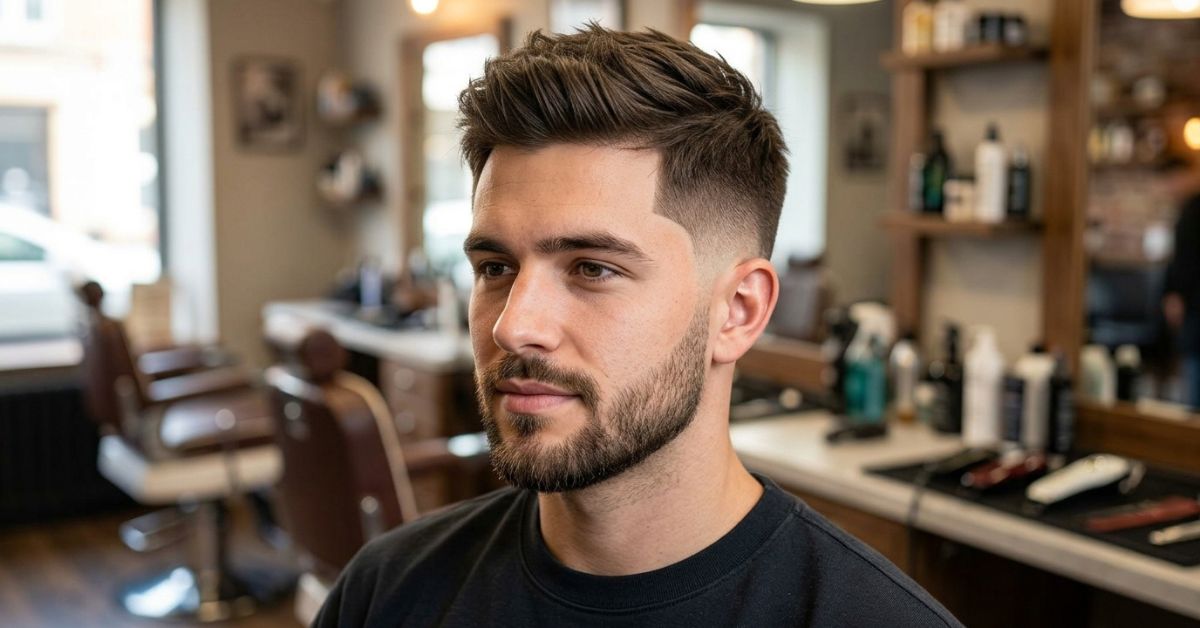
A high taper fade on straight hair is one of the cleanest cuts a barber can give you. It keeps the sides tight and sharp, while the top stays long enough to style. The catch is that straight hair shows every mistake and tends to fall flat. This guide covers how the cut works, which styles suit you, what products to buy, and how to keep the look sharp between visits.
Does a High Taper Fade for Straight Hair?
Yes. Straight hair holds clean lines well, so a high taper fade looks crisp and precise. The main challenge is adding volume on top, which the right products and blow-drying can fix.
What Is a High Taper Fade and Does It Work for Straight Hair?
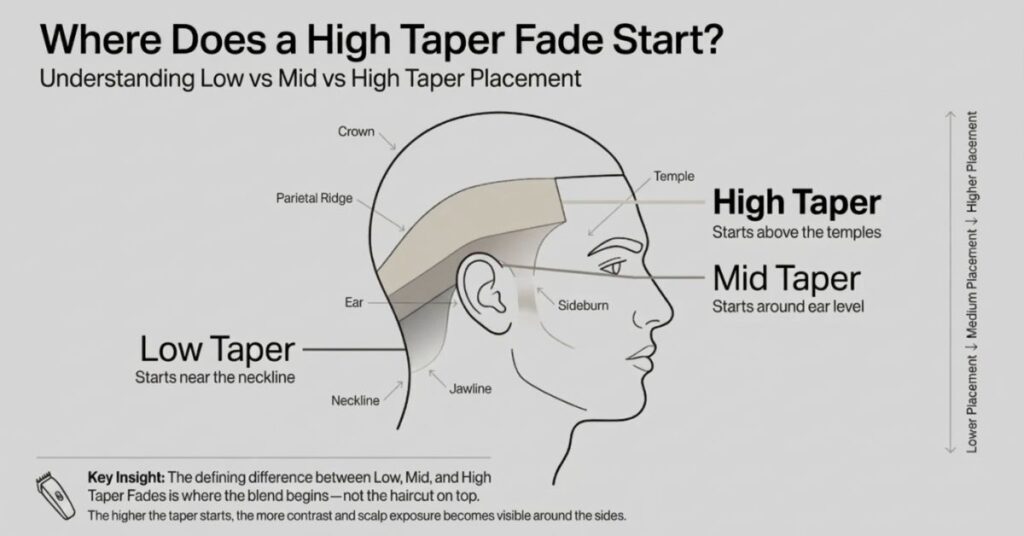
A high taper fade is a haircut where the hair on the sides and back gets shorter in a gradual line that starts high, around the temple. Unlike a skin fade, a taper usually leaves some length at the bottom, so the nape and sideburns look neat but not bald.
Straight hair suits this cut for three reasons:
- It lies flat, so the gradient looks smooth and even.
- It takes direction easily, so combing, parting and slicking are simple.
- Weight removal on the sides keeps thick straight hair from looking boxy.
The trade-off is that straight hair can look limp on top. That is why the styling steps later in this guide matter as much as the cut itself.
Will a High Taper Fade Show Up on Light or Blonde Straight Hair?
It shows less, but it still works. On blonde, gray or light brown hair, there is less color difference between the scalp and the hair, so the fade looks softer.
Here is how to get more contrast:
- Ask for a slightly shorter bottom guard, such as a 0.5 or 1, so the gradient is easier to see.
- Keep the top longer, so the length difference is clear.
- Choose a matte product, since shine can wash out the texture on pale hair.
- Keep the neckline and sideburns clean, because sharp edges add definition.
Gray or platinum hair often looks best with a soft gradient rather than a harsh bald fade.
Technique 1: The Hard Part
A hard part is a shaved or clipped line cut into the hair, usually on one side. On straight hair it looks very sharp.
Your barber cuts the part with a trimmer, then blends the taper around it. Style the top with a comb and a light pomade. This works best on medium to thick hair, since thin hair can look patchy next to a shaved line.
Technique 2: Soft Gradient Over Skin Fade
Many people confuse a taper with a skin fade. A soft gradient keeps a little length at the bottom instead of going down to the skin.
This is the safer pick for office jobs, fine hair and people who dislike a bald look. It also grows out more gracefully, so you can wait a little longer between cuts.
Technique 3: Textured Top Styling
Straight hair needs texture to avoid looking flat. Your barber can use point cutting or thinning shears to add movement to the top.
Ask for layers on top, not one blunt length. Layers help the hair separate and hold product, which is the secret behind most good-looking textured tops.
What Products Does Straight Hair Need for a High Taper Fade?
Pick products by finish and hold. Here is a simple guide:
- Sea salt spray: Adds grip and a messy, lived-in feel. Use it on damp hair.
- Volumizing powder: Lifts roots and gives fine hair body.
- Matte clay: Strong hold with no shine. Good for textured crops and quiffs.
- Pomade (water-based): Medium to high shine for slick backs and side parts, and it washes out easily.
- Hair spray: A light mist locks the shape in for humid days.
- Blow dryer with a nozzle: Controls direction and creates lift.
Avoid heavy waxes on fine straight hair. They weigh it down and cut the volume you are trying to build.
How to Style a High Taper Fade on Straight Hair
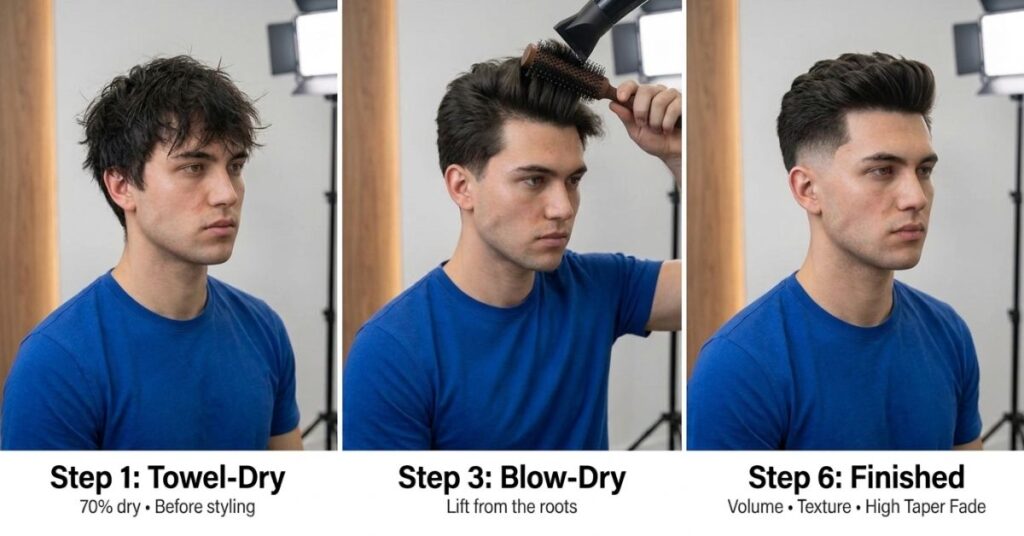
Follow these steps for a clean daily routine:
- Wash your hair and towel dry until it is damp, not dripping.
- Apply sea salt spray or a light pre-styler from roots to tips.
- Blow dry the top upward and back, using your fingers or a brush.
- Rub a pea-sized amount of clay or pomade between your palms.
- Work it through from the back to the front, then shape the front last.
- Finish with a light mist of spray if you need extra hold.
Do not overload the product. More is not better on straight hair, and too much leaves it flat and greasy.
Which High Taper Fade Styles Work Best on Straight Hair?
Textured Crop Best for Low-Maintenance Straight Hair
A short, choppy top with a forward fringe. It needs only a few minutes and a little clay each morning. It works well for busy people who want a sharp look without a long routine.
Pompadour Best for Volume Goals
The pompadour sweeps the top up and back with a lot of height. It uses a blow dryer and strong hold product. The high taper keeps the sides tight, so the volume looks even bigger.
Side Part / Comb-Over Best for Professional Settings
A classic part with a combed top and a clean taper. It reads as polished and confident in an office or interview. Use a light pomade for a neat finish.
Slick Back: Best for Thick Straight Hair
Thick straight hair slicks back with ease and looks full. The taper removes bulk from the sides so the shape stays clean. Use a water-based pomade and comb back while the hair is damp.
Quiff: Best for Round Faces with Straight Hair
A quiff adds height at the front, which lengthens the face. Paired with tight sides, it creates a stronger vertical line. Blow dry the front up, then set it with clay.
Buzz Cut Top Best for Zero-Maintenance Straight Hair
A short, even length on top with a high taper on the sides. There is no styling at all. It suits people who want a neat look with no products and no time spent each morning.
Which Face Shape Gets the Best Results from a High Taper Fade?
Most face shapes work, but some get bigger gains:
| Face Shape | Why It Works | Best Pairing |
| Round | Tight sides add height and angles | Quiff or pompadour |
| Oval | Balanced, suits almost anything | Side part or textured crop |
| Square | Taper softens strong jaw lines | Slick back or crop |
| Long or oblong | Keep top height moderate | Textured crop with fringe |
| Heart | Adds balance to a narrow chin | Side part or short quiff |
If you have a long face, avoid very tall styles. Choose a lower top so the cut does not stretch your face further.
How Often Does a High Taper Fade Need to Be Trimmed?
Most people need a trim every 2 to 4 weeks. The high taper shows regrowth fast because the contrast is sharp. If you prefer a softer look, you can stretch it to 5 weeks.
Signs it is time for a visit:
- The neckline looks fuzzy.
- The sideburns have grown past the ear line.
- The fade looks blurry instead of smooth.
How to Extend Your High Taper Fade at Home
You can buy extra days with some simple care. Always be careful, because a trimmer can ruin a fade fast.
- Use a small trimmer to clean the neckline only.
- Tidy the sideburns with the trimmer upside down.
- Leave the fade itself alone, and let your barber fix any blending.
- Wash and condition regularly so the top stays healthy.
Do not try to blend the gradient yourself unless you have practice. Uneven steps are very hard to fix.
How Do You Ask Your Barber for a High Taper Fade on Straight Hair?
Clear words prevent bad cuts. Bring a reference photo and say something like this:
- “I want a high taper fade, starting at the temple.”
- “Leave a guard 1 at the bottom, not a skin fade.”
- “Keep 3 to 4 inches on top and add texture.”
- “Clean the neckline with a tapered finish, not blocked.”
- “I want to style it with a blow dryer.”
Mention how you style your hair each day. Also say if you have a cowlick, since straight hair shows these clearly and a good barber will cut around them.
High Taper vs. Mid Taper vs. Low Taper: Which Is Right for Your Straight Hair?
| Feature | High Taper | Mid Taper | Low Taper |
| Starting point | Temple | Above the ear | Near the ear and nape |
| Contrast | High | Medium | Low |
| Best for | Bold, modern looks | Balanced everyday style | Conservative, office looks |
| Upkeep | Every 2 to 3 weeks | Every 3 to 4 weeks | Every 4 to 5 weeks |
Choose a high taper if you want clear contrast and volume on top. Pick a mid taper for a safe middle ground, and a low taper if you work in a conservative setting or want the longest time between cuts.
Which Straight Hair Type Works Best with a High Taper Fade?
- Thick straight hair: The best match. The taper cuts bulk and the top holds heavy styles.
- Medium straight hair: Very flexible. Almost every style works.
- Fine or thin straight hair: Works well with a textured top and volumizing powder. Avoid heavy products, and keep the top shorter so it does not lie flat.
- Coarse straight hair: Needs a stronger hold product and a bit more trimming to stay neat.
If your hair thins at the temples, ask the barber to start the taper a little lower so the cut does not highlight the area.
Seasonal Styling Adaptations for a High Taper Fade on Straight Hair
Summer: Humidity and Sweat
Heat and sweat can make straight hair go limp. Use a matte clay and a light spray for hold. Avoid heavy pomades, which melt. Shampoo more often to clear sweat and buildup.
Winter: Static and Dryness
Cold air dries the hair and causes static. Use a small amount of leave-in conditioner or light oil. Choose a pomade with some moisture and dry your hair with a lower heat setting. Wear a loose beanie, since tight hats flatten the top.
Spring and Fall: Flexible Hold
Mild weather lets you experiment. Use a medium hold product and switch between textured and sleek looks. This is a good time to try a new top style while your fade stays consistent.
Frequently Asked Questions
Can you get a high taper fade with fine straight hair?
Yes. Ask for a textured top and use volumizing powder to add body.
Is a high taper fade professional enough for work?
Yes, especially with a side part or comb-over and a soft gradient.
What is the difference between a high taper and a high fade?
A high taper keeps some length at the edges, while a high fade usually goes shorter or to the skin.
How long should the top be for straight hair?
Between 3 and 5 inches works well for most styles, with shorter lengths for crops.
How much does a high taper fade cost?
Prices vary by barber and city. Expect a typical men’s cut rate, sometimes a little more for detailed work.
Does a high taper fade make thin hair look thinner?
Not if the top has texture and volume. Avoid very short tops and heavy products.
Can I do a high taper fade at home?
It is not recommended. Home blending often creates uneven lines.
Key Takeaways
- A high taper fade starts at the temple and blends down with a clean gradient.
- Straight hair holds the cut well but needs texture and product for volume.
- On blonde or light hair, ask for a slightly lower bottom guard for more contrast.
- Choose styles by face shape: quiffs and pompadours for round faces, side parts for work.
- Trim every 2 to 4 weeks and use a small trimmer only for the neckline at home.
- Tell your barber the guard number, top length and how you style your hair.
- Adjust products by season to beat sweat, static and dryness.
A high taper fade on straight hair gives you clean edges, strong contrast and plenty of styling options. Get the cut right, match the top to your face shape, and use light but smart products. With a good barber and a short routine, the result looks sharp every day.

Marco Silva is a fashion writer and content creator at Faxhion Purly, sharing practical insights on clothing, styling, fashion trends, and personal style. With a focus on research and clear communication, Marco creates reader friendly articles designed to help fashion enthusiasts discover useful ideas, understand trends, and make informed style choices.