
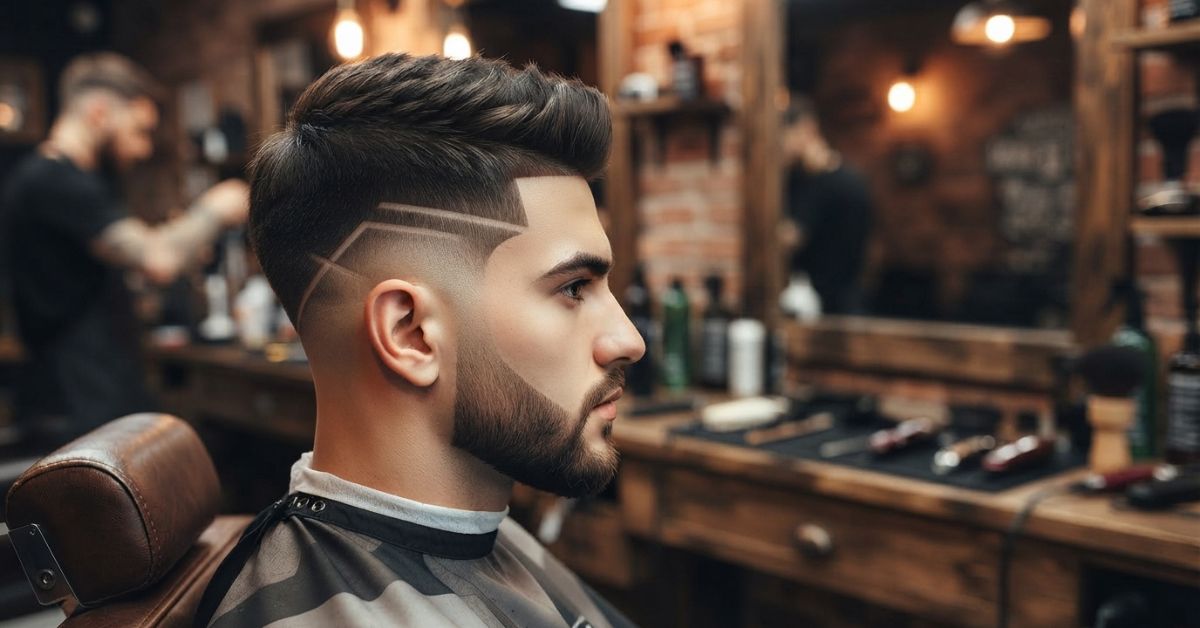
Low fade side design taper turn a simple, everyday haircut into a personal style statement. If you already love how a low taper fade blends the sides and neckline into a soft, natural line, adding a carved design takes that same clean base and gives it a signature touch. Whether you want a single subtle line near the temple or a full freestyle piece across the back of your head, this guide walks through everything you need to know before you sit in the barber’s chair.
Below, you’ll find 50 style ideas organized by placement and hair type, a breakdown of how these designs are actually cut, the exact words to use with your barber, product recommendations for every texture, and answers to the questions men ask most about this trend.
What Is a Low Taper Fade Design and How Long Does It Last?
A low taper fade design is a haircut that pairs a gradual, close fade starting just above the ears and neckline with a pattern, line, or motif shaved directly into the faded section. The taper itself keeps things understated, while the design adds contrast and personality.
Most designs hold their sharp lines for about 7 to 10 days. After that, natural regrowth softens the edges, and the pattern starts to blend into the surrounding hair. Simple line work tends to last a bit longer than dense freestyle art, since fewer fine details need to stay crisp.
What Is a Low Taper Fade Design?

At its core, a low taper fade design is built on two layers. The first is the taper fade itself, a smooth transition from longer hair on top down to very short hair near the ear and hairline, with no harsh line separating the lengths. The second layer is the artwork: a barber uses a T-outliner or straight razor to carve a pattern into that faded zone once the base cut is finished.
Because the fade starts low, there’s less exposed scalp to work with compared to a mid or high fade. This makes low taper fade designs a great entry point for men who want a design without a dramatic, attention-grabbing look. The pattern sits closer to the natural hairline, so it reads as detailed rather than bold.
Low Taper Fade vs. Skin Fade: Which Is Better for Designs?
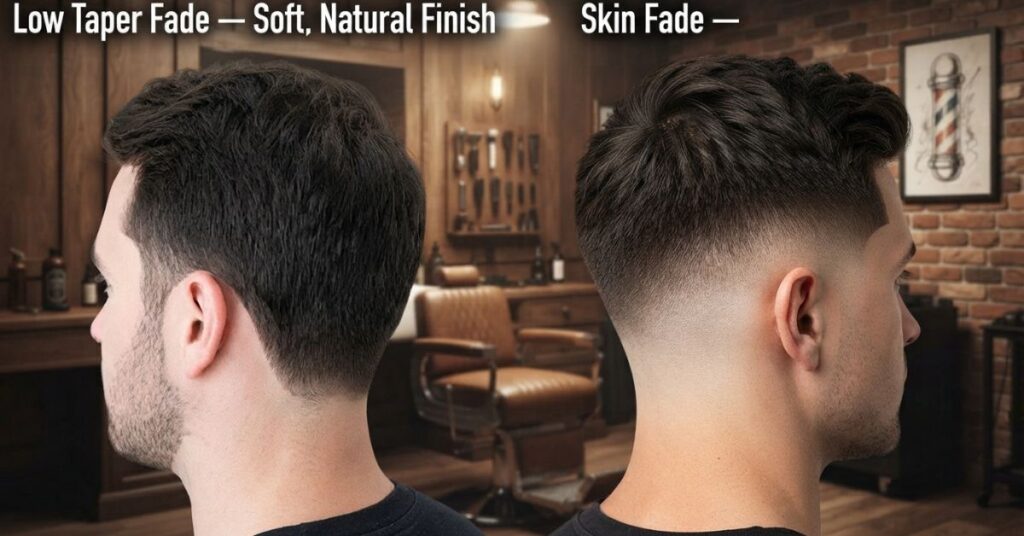
Both a low taper fade and a skin fade can carry a design well, but they produce different results.
- Low taper fade: Blends down to very short hair without going fully bald at the skin. Designs on a low taper look softer and slightly less defined, but the overall haircut looks more natural and grows out more gracefully.
- Skin fade: Fades all the way to bare skin, which makes any carved design stand out with sharper, higher contrast lines.
If this is your first time getting a design, a low taper fade is the safer choice. It’s more forgiving as the pattern grows out, easier to maintain between barber visits, and works well in professional settings where a skin fade design might read as too bold.
50 Best Low Taper Fade Designs for Men (2026 Gallery)
Here’s how the most popular low taper fade designs break down by placement, style, and hair type. Use this as a starting point to describe what you want to your barber.
Back Low Taper Fade Designs
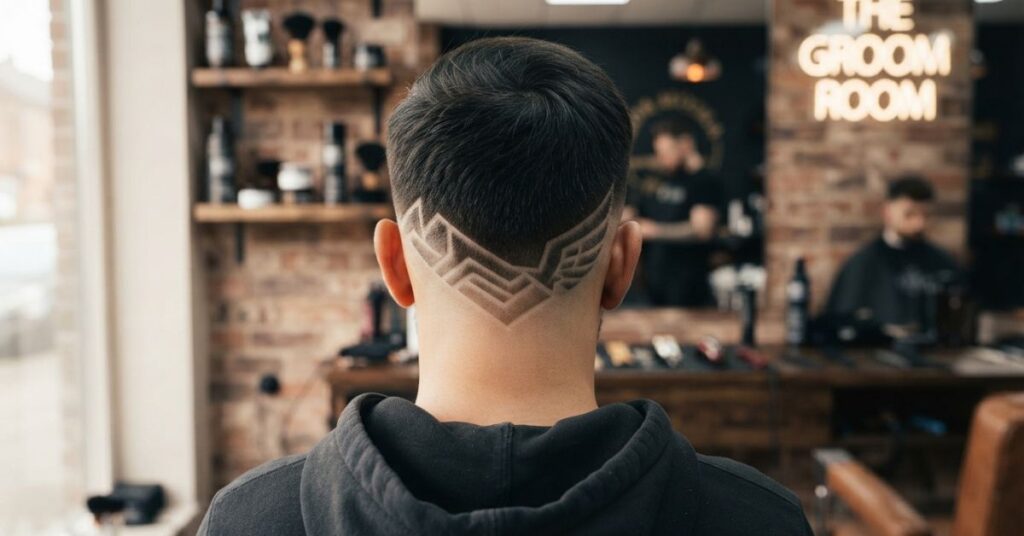
The back of the head is the most popular canvas for a design, since it’s the widest section of faded hair and gives a barber the most room to work.
- Curved parting line following the natural head shape
- Star pattern centered above the nape
- Initials or a single letter shaved into the crown area
- Tribal-inspired swirl pattern
- Double curved lines mirroring each other
- Small crown or shield emblem
- Lightning bolt accent
- Wave pattern that mimics ocean lines
- Compass or arrow design for a symbolic look
- Full freestyle mural covering the whole faded section
Side Low Taper Fade Designs
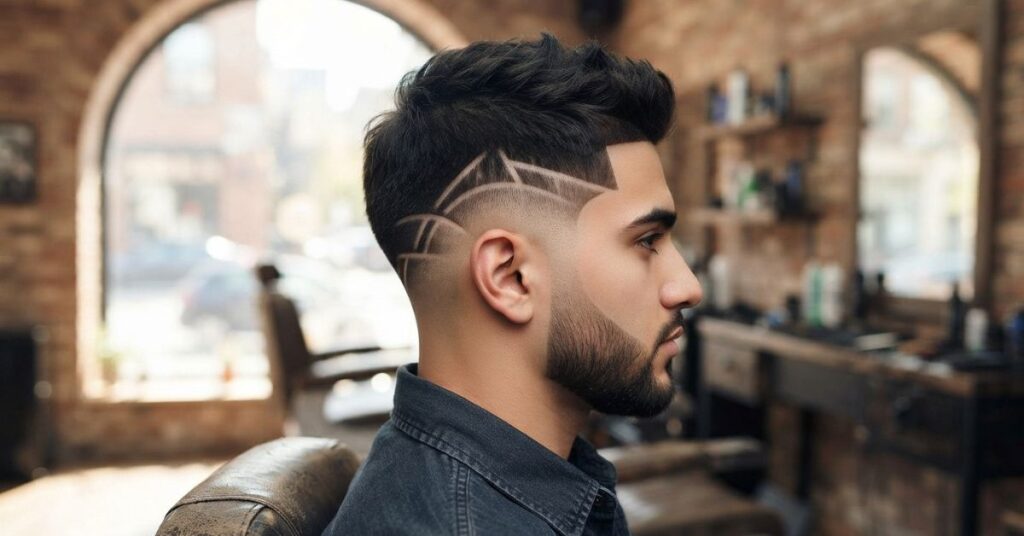
Side designs sit near the temple, so they stay visible even with hair combed over or styled forward.
- Single straight line above the ear
- Double parallel lines for subtle detailing
- Zigzag pattern along the temple
- Small geometric triangle cluster
- Thin curved line following the taper’s natural blend
- Checkerboard square pattern
- Diagonal slashes cutting through the fade
- Star accent near the hairline
- Dotted line pattern for a minimalist look
- Spiral design tucked behind the ear
Freestyle Low Taper Fade Designs
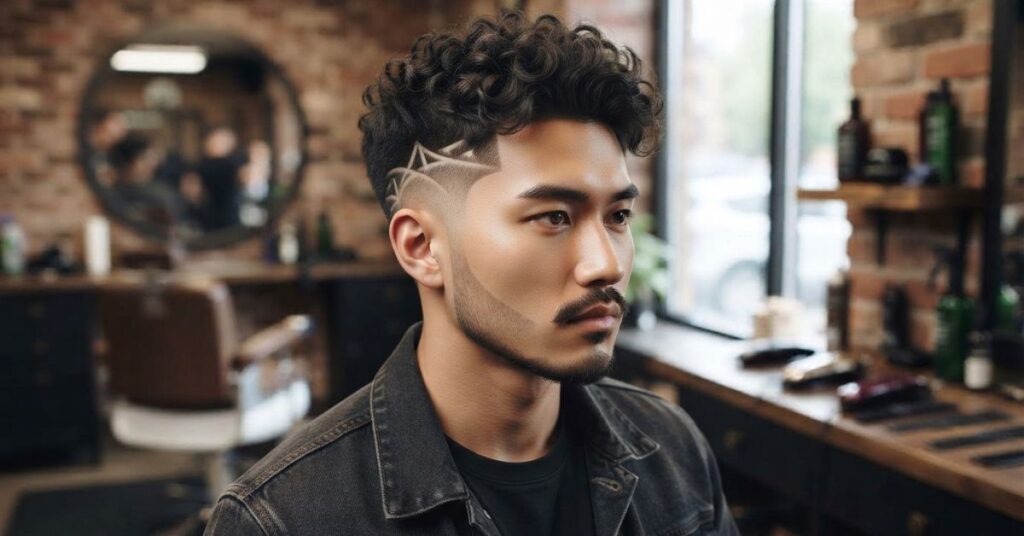
Freestyle designs are custom, artistic pieces rather than repeating patterns. These require an experienced barber comfortable working freehand with clippers or a razor.
- Abstract line art covering one side
- Nature-inspired designs like leaves or vines
- Animal silhouette, such as a wolf or eagle
- Flame pattern rising from the neckline
- Custom lettering or a short word
- Sports team logo or jersey number
- Religious or cultural symbol
- Music note cluster
- Portrait-style freehand art for advanced barbers
- Combination piece mixing lines, shapes, and shading
Edgar Cut with Low Taper Fade Designs
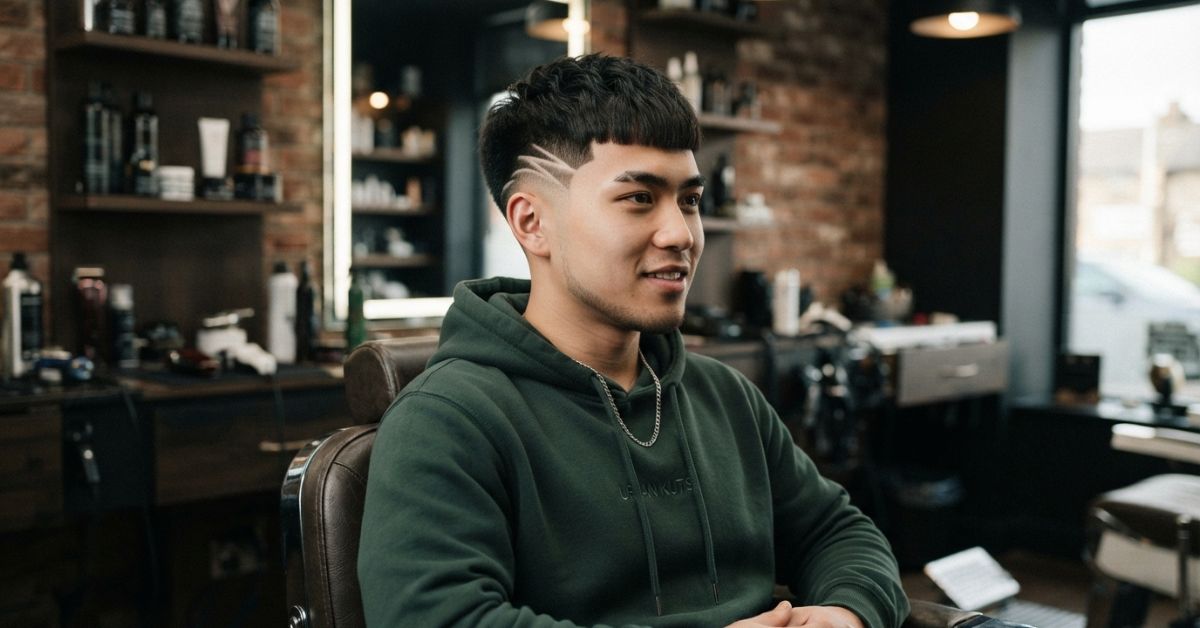
The Edgar cut pairs a straight, blunt fringe with tight sides, and it works especially well with a low taper design since the sharp fringe line contrasts nicely with a carved pattern.
- Edgar cut with a single side line
- Edgar cut with a curved back design
- Edgar cut with double temple lines
- Edgar cut with a small star accent
- Edgar cut with a freestyle side piece
Small & Subtle Low Taper Fade Designs
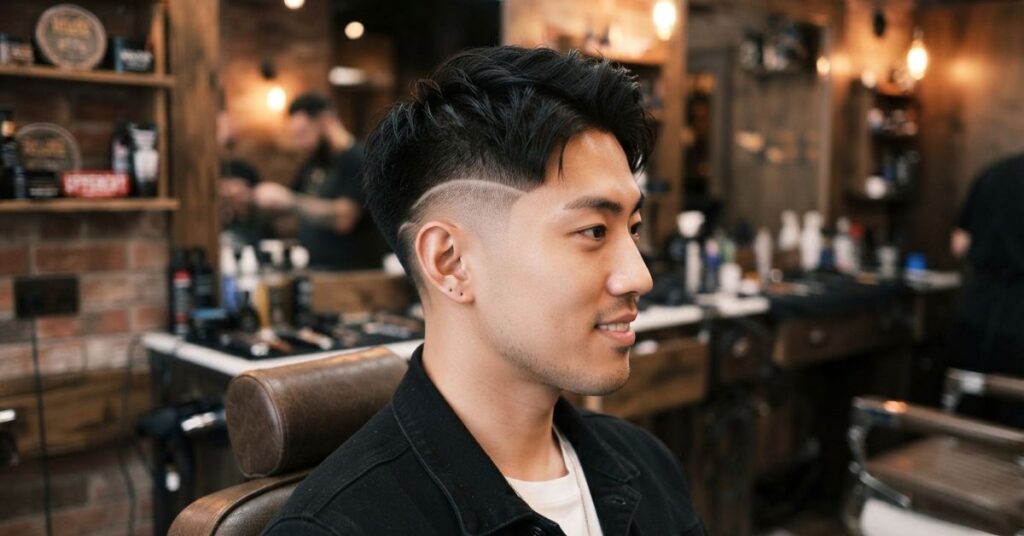
Not every man wants a bold statement. These smaller, understated designs work well for offices, interviews, and everyday wear.
- Single thin line at the temple
- Small dot cluster
- One subtle curved accent near the ear
- Tiny geometric shape hidden under longer top hair
- Faint parting line that blends within days
Low Taper Fade Designs by Hair Type
Designs look different depending on your natural texture. Here’s how to adapt them.
Low Taper Fade Designs for Curly Hair
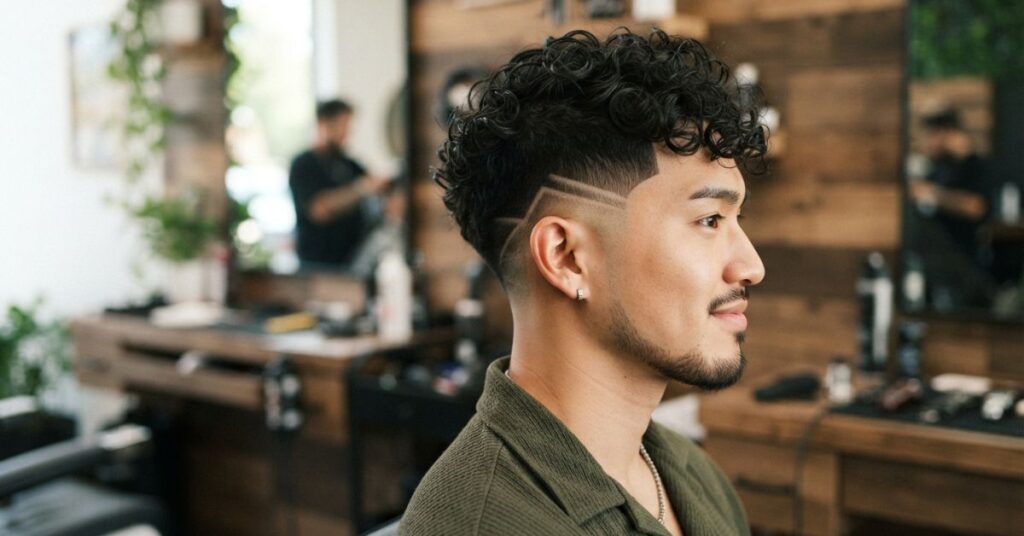
Curly hair adds natural volume on top, which creates a strong contrast against a clean, faded design underneath. Ask for a low taper fade design paired with a defined curl pattern on top, using a curl-defining cream to keep the top full while the sides stay sharp.
Low Taper Fade Designs for Straight Hair

Straight hair shows off crisp, geometric designs particularly well, since there’s minimal texture to soften the lines. Straight-haired men often pair a low taper fade design with a side part, comb-over, or French crop.
Low Taper Fade Designs for Wavy Hair
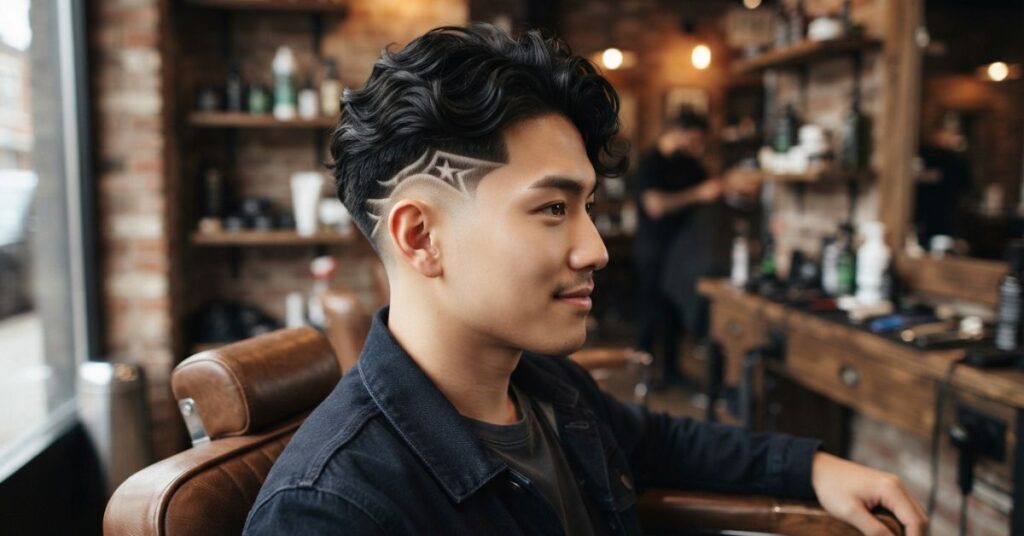
Wavy hair sits between curly and straight, giving designs a slightly softer look on top while still holding a sharp fade underneath. A textured quiff or messy fringe pairs naturally with most side or back designs.
Low Taper Fade Designs for Afro-Textured Hair

Afro-textured hair holds shape and volume exceptionally well, making it ideal for bold freestyle back designs that stay visible even as the top grows longer. Twists, coils, and afros all work with a low taper base.
How Are Low Taper Fade Designs Created? (Step-by-Step)
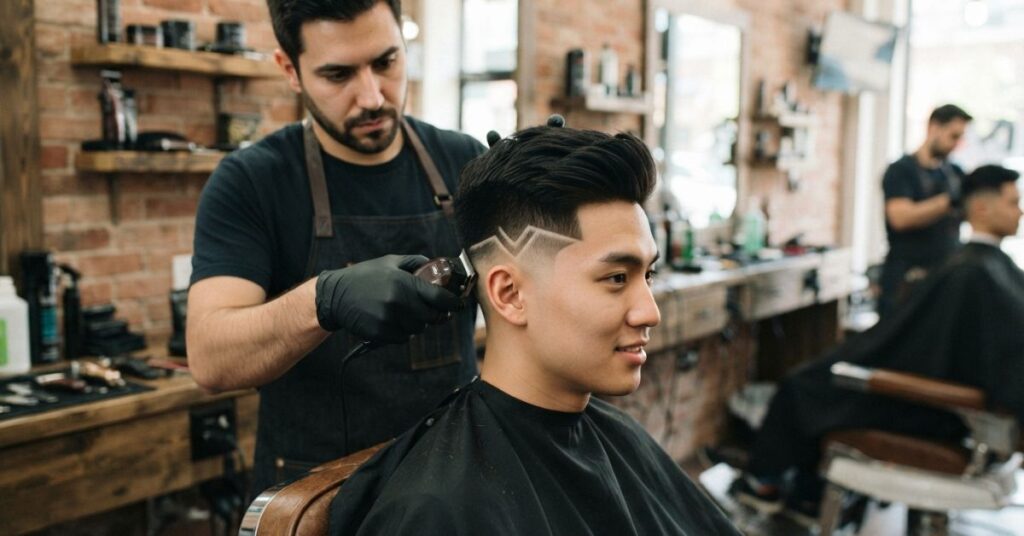
- Consultation. Your barber discusses hair type, face shape, and the design you want before any cutting begins.
- Base taper fade. Clippers blend the sides and back from longer to shorter hair, stopping just above the ears and neckline.
- Sectioning. The barber marks or sections the area where the design will go.
- Outlining the pattern. Using a T-outliner or straight razor, the barber carves the outline of the design first.
- Filling in detail. Finer lines, shading, and texture are added to complete the pattern.
- Cleanup and blending. The edges of the design are blended into the surrounding fade so nothing looks harsh or disconnected.
- Finishing touches. The barber checks symmetry, cleans the neckline, and applies a finishing product if needed.
How to Ask Your Barber for a Low Taper Fade Design

Clear communication is the difference between a design you love and one that misses the mark. Bring a reference photo whenever possible, and use language like this:
- “I want a low taper fade starting just above my ears, blended with no harsh line.”
- “Please add [describe design, for example a single curved line or a small star] on the [side/back] of the fade.”
- “Keep the design simple enough that it grows out cleanly over a week or two.”
- “I have [curly/straight/wavy/afro-textured] hair, so please adjust the top length so the design stays visible.”
If you’re unsure what will suit you, ask your barber to recommend a design based on your hair density and face shape. Experienced barbers can often suggest a pattern that photos alone don’t capture well.
Best Styling Products for Low Taper Fade Designs

The right product keeps your top hair looking intentional while letting the design underneath stay visible.
For Curly Hair
A curl-defining cream or lightweight curl gel keeps curls separated and full without weighing them down, which helps the design underneath stand out.
For Straight Hair
A matte clay or light pomade gives straight hair texture and hold without excess shine, keeping the overall look clean and modern.
For Wavy Hair
A sea salt spray or light mousse enhances natural wave pattern while adding the kind of texture that pairs well with side or back designs.
For Afro-Textured Hair
A moisturizing curl butter or edge control product keeps coils and twists defined and helps maintain sharp lines around the design’s border.
How to Maintain a Low Taper Fade Design

- Book a touch-up every 7 to 10 days to keep the design crisp before regrowth softens the lines.
- Ask your barber to only refresh the outline rather than recutting the entire fade each visit, which helps hair grow out evenly over time.
- Moisturize the scalp between visits, especially if you have textured or afro hair, to avoid dryness in the faded area.
- Avoid picking or scratching near the design, since irritation can affect how sharp the lines look as they grow.
- Protect the design at night with a silk or satin cap if you have curly or textured hair, which helps prevent frizz around the pattern’s edges.
Low Taper Fade Design Mistakes to Avoid

- Choosing an overly complex design for a first-timer. Intricate freestyle pieces grow out unevenly and need more frequent upkeep.
- Skipping the reference photo. Verbal descriptions alone often lead to miscommunication about placement and size.
- Going to a barber without design experience. Not every barber specializes in freehand razor work, so ask to see examples of their previous designs first.
- Ignoring hair type when picking a design. A pattern that looks sharp on straight hair might disappear quickly under thick curls or coils.
- Waiting too long between touch-ups. Letting the design grow out fully before your next appointment makes it harder to recut cleanly.
Frequently Asked Questions
How long does a low taper fade design last?
Most designs stay sharp for 7 to 10 days before regrowth starts to soften the lines.
What is the difference between a low taper fade and a skin fade?
A low taper fade blends to very short hair without going bald at the skin, while a skin fade fades all the way down to bare scalp.
Can I get a low taper fade design on curly hair?
Yes. Curly hair works well with low taper fade designs, especially when paired with a curl-defining cream to keep the top full and textured.
How much does a low taper fade with a design cost?
Pricing varies by barber and design complexity, but expect to pay more than a standard taper fade, often an added fee for detailed line work or freestyle art.
What is a freestyle low taper fade design?
A freestyle design is a custom, artistic pattern carved freehand rather than a simple repeating line or shape, often requiring an experienced barber.
What is an Edgar cut with a low taper design?
It’s a haircut that combines the blunt, straight fringe of an Edgar cut with a low taper fade and a carved design on the sides or back.
Are low taper fade designs professional or work-appropriate?
Small, subtle designs near the temple or hidden under top hair generally read as professional, while bold freestyle pieces may be more casual.
What is a small taper design?
A small taper design is a minimal pattern, such as a single line or small shape, placed discreetly within the fade for a subtle look.
How do I choose the right low taper fade design for my face shape?
Ask your barber for guidance, since placement and size can be adjusted to balance features like a rounder or more angular jawline.
Final Thoughts
Low taper fade designs give you a way to personalize a classic, versatile haircut without going overboard. From a single subtle line to a full freestyle back piece, there’s a design here for every hair type, occasion, and comfort level. Bring a clear reference to your next barber visit, keep up with touch-ups every week or two, and you’ll have a sharp, personalized look that holds up between appointments.

Marco Silva is a fashion writer and content creator at Faxhion Purly, sharing practical insights on clothing, styling, fashion trends, and personal style. With a focus on research and clear communication, Marco creates reader friendly articles designed to help fashion enthusiasts discover useful ideas, understand trends, and make informed style choices.