
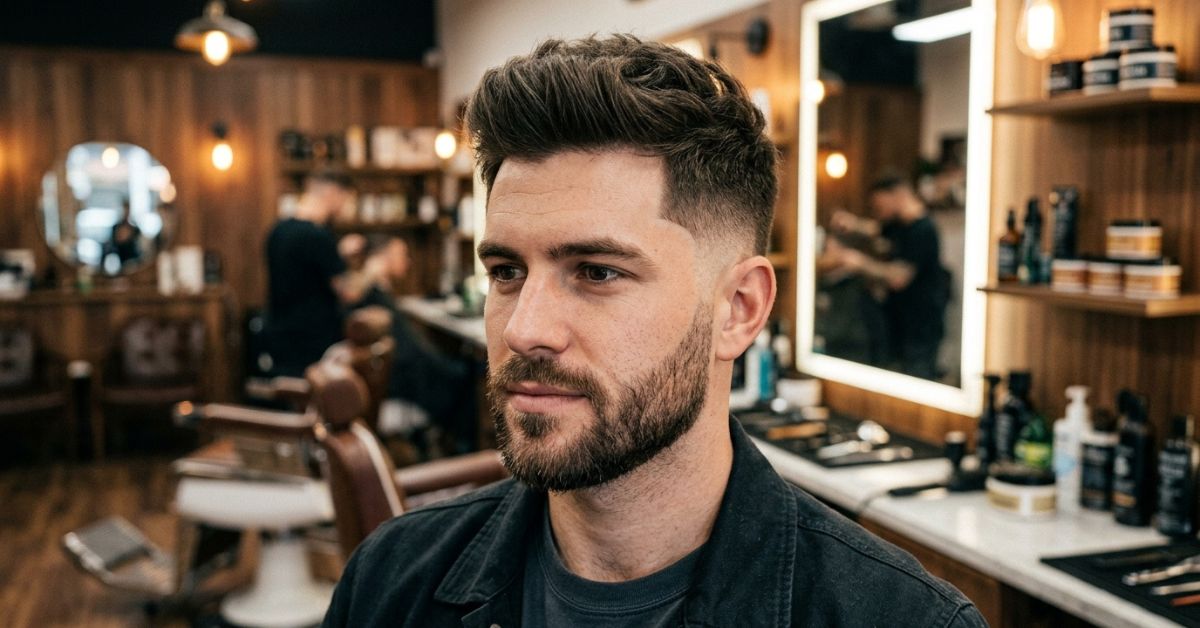
A High Taper Haircut for Men is one of the sharpest cuts you can ask for. It keeps the top full, cleans up the sides, and gives your head a tidy, tall shape. It also works on straight, wavy, curly, and coily hair.
This guide explains what a high taper is, how it differs from a fade, and how to describe it to your barber. You will also find 35 styles, face shape and hair type advice, guard numbers, styling steps, and upkeep tips.
What Is a High Taper Haircut for Men, and Who Is It Best For?
A high taper haircut gradually shortens the hair on the sides and back, starting high near the temples. The hair stays visible all the way down. That is what separates it from a skin fade.
Quick facts:
- The taper starts at or just above the temple line
- Works on straight, wavy, curly, coily, thick, and fine hair
- Suits round, oval, square, and diamond faces best
- Needs a trim every 2 to 3 weeks to stay crisp
- Looks right in offices, creative jobs, and casual settings
It is a good pick if you want a clean outline without a dramatic skin finish. Barbers usually build it with clippers, then refine the edges with a trimmer.
High Taper Haircut vs High Taper Fade: What’s the Difference?
A taper shortens hair gradually but leaves it visible. A fade goes down to bare skin. A high taper fade combines both ideas: the blend starts high, then reaches skin at the lowest point.
| Feature | High Taper | High Taper Fade |
|---|---|---|
| Skin showing | No | Yes, at the bottom |
| Contrast | Moderate to bold | Very bold |
| Upkeep | Every 2 to 3 weeks | Every 1.5 to 2 weeks |
| Best setting | Almost anywhere | Casual and creative |
Think of a taper as a gentle volume dial. A fade is closer to a mute button at the bottom.
Understanding High Taper Placement: Sides, Back & All Around
Placement decides how the cut looks from every angle. Many men only describe the front and sides, then get surprised by the back.
What Does “High Taper on the Sides” Mean?
It means the blend begins above the temples and runs down toward the ears. This creates sharp temple definition and adds visual height.
For round faces, that extra height makes the face look longer and more defined. If you want this look, say “start the taper at the temples.” The word “high” alone can mean different things to different barbers.
What Does “High Taper Back” Look Like?
At the back, the taper runs down to the nape. You can finish the neckline three ways:
- Tapered: fades naturally into your hairline and grows out the neatest
- Blocked: a sharp horizontal line that looks bold but needs frequent touch-ups
- Rounded: a soft curve, between the other two
Pick a tapered neckline if you want an extra week between cuts. Tell your barber your choice, because they cannot guess it.
High Taper vs Other Taper Fades: Complete Comparison
The main difference is where the blend starts and how much hair is left.
High Taper vs Low Taper Fade
A low taper starts just above the ears and follows the neckline. It is subtle and traditional. A high taper starts near the temples, so it looks bolder and adds height.
Choose low for a minimal change. Choose high if you want a defined, modern shape.
High Taper vs Mid Taper Fade
A mid taper begins midway between the ear and temple. It is the balanced choice and a safe first pick. If you are unsure, try mid, then go higher next visit.
High Taper vs High Fade (Skin Fade)
A high skin fade reaches bare skin far up the head and needs a visit every 1 to 2 weeks. A high taper keeps more hair, so it grows out more gently.
35 Best High Taper Haircut Styles for Men (2026)
Save the photos that match your hair type and show them to your barber. Each style below lists the best face shapes and one styling tip.
High Taper Styles for Curly & Coily Hair
1. High Taper Fade Curly Top
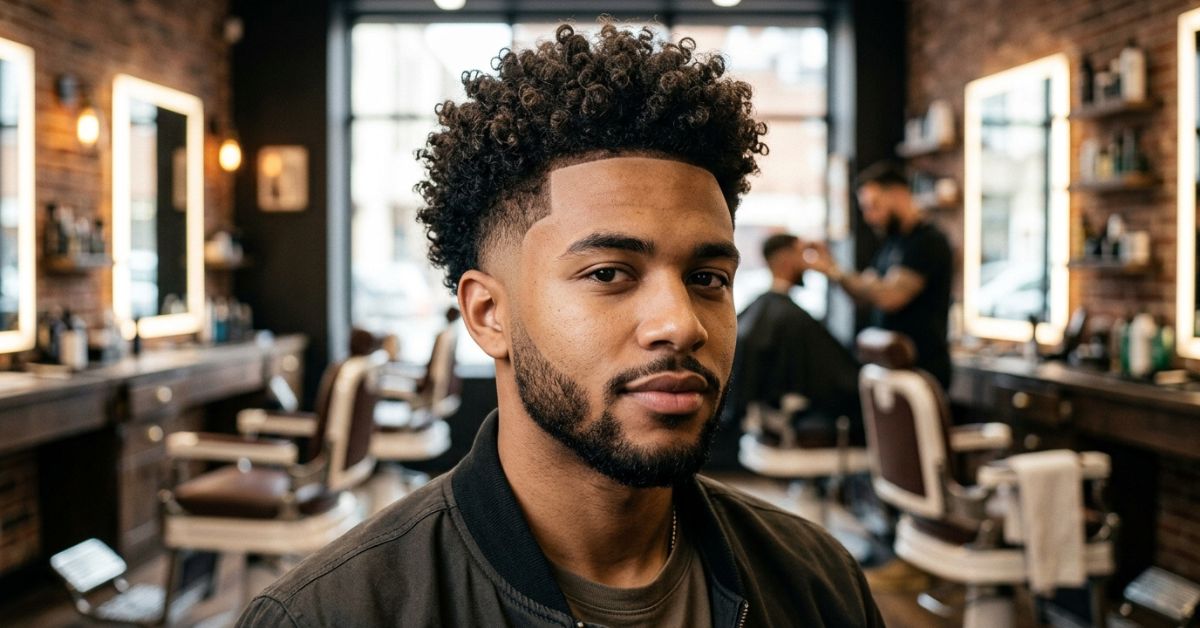
Long, full curls on top with clean tapered sides. Best for oval, round, and diamond faces. Apply curl cream to damp hair and diffuse on low heat.
2. High Taper Fade Afro
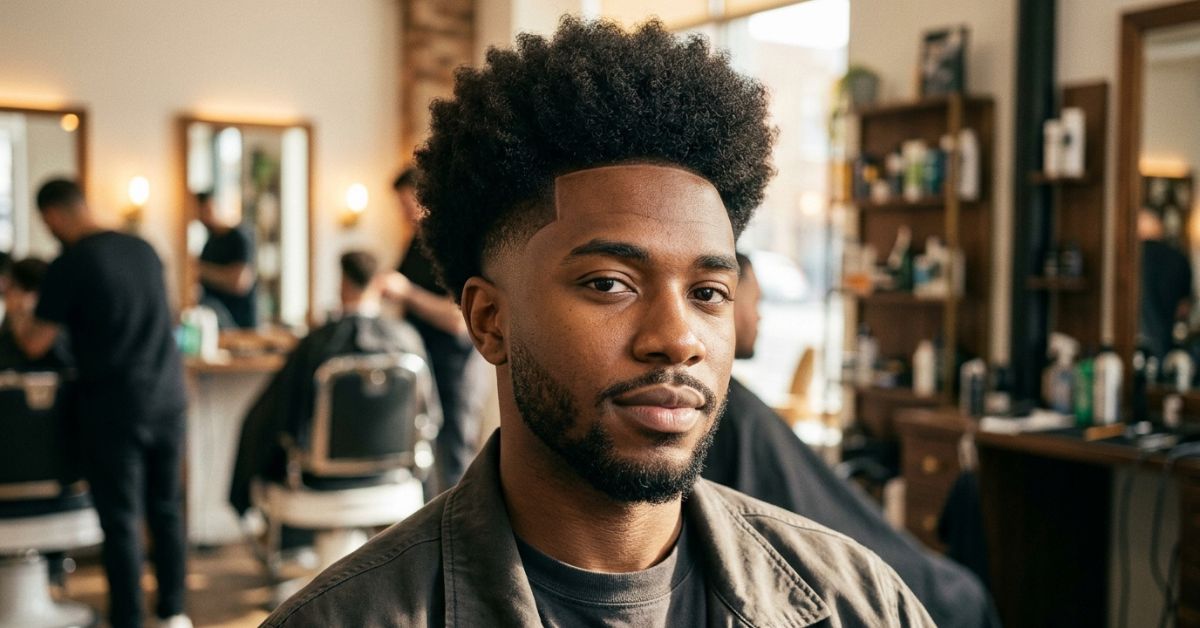
A round afro with crisp edges and a sharp taper. Best for round, oval, and heart-shaped faces. Pick curls out while damp, then shape with your fingers.
3. High Taper Fade Waves
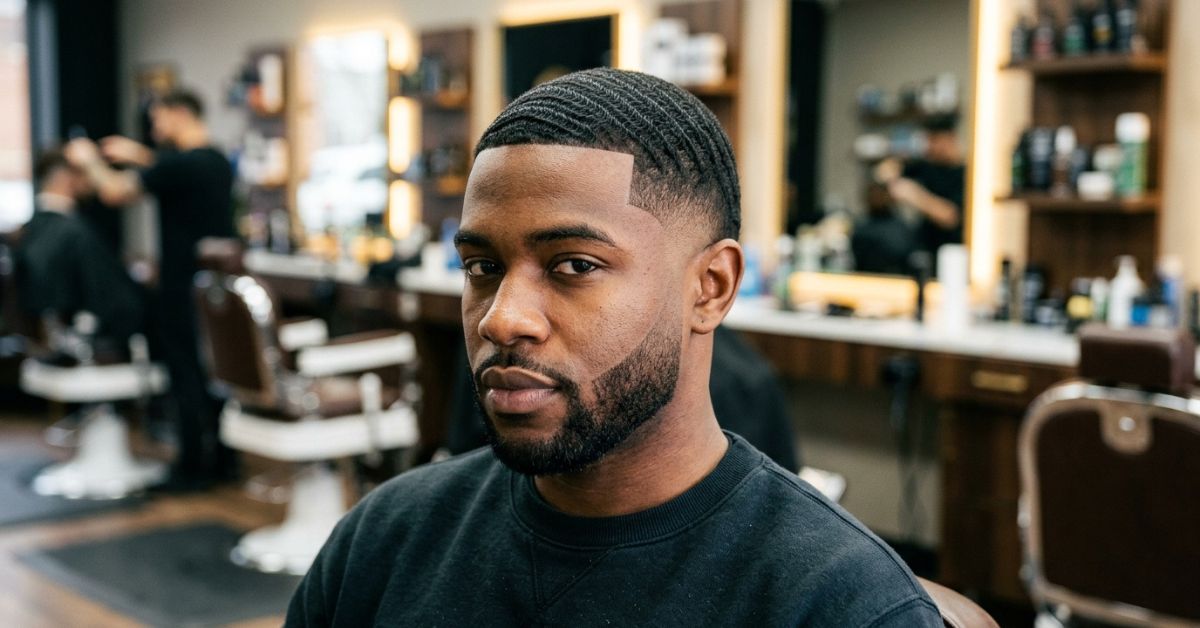
Brushed 360 waves on top with a tight taper around the temples and neckline. Best for oval and square faces. Brush daily and wear a durag overnight.
4. High Taper Fade Blowout
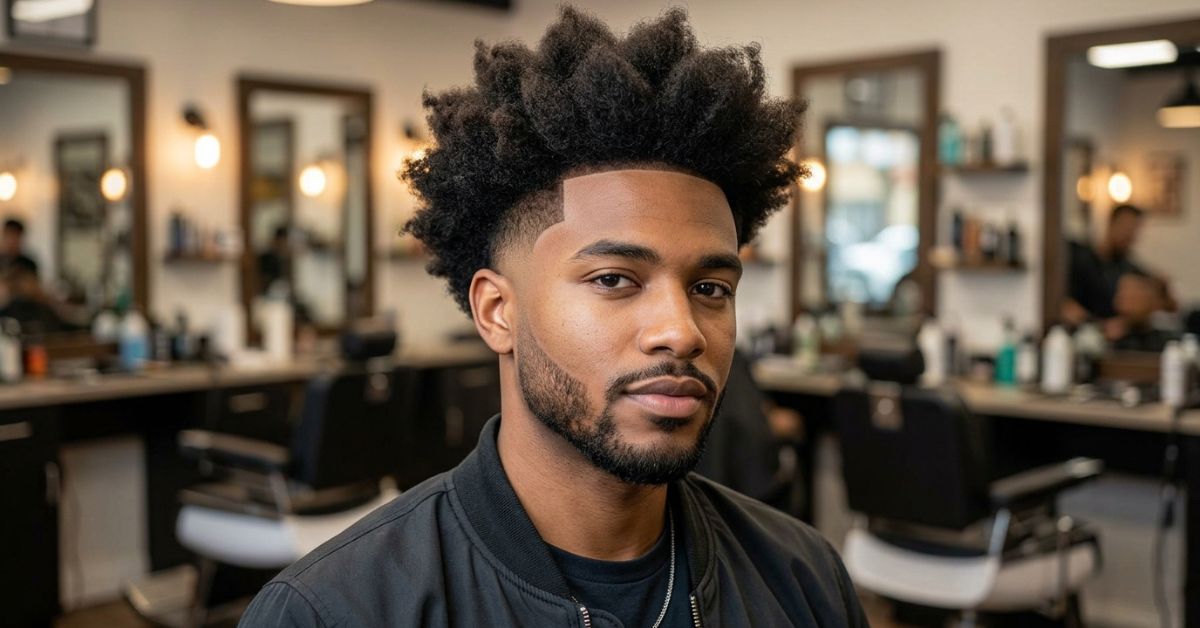
Lifted curls with high volume at the crown and tight sides. Best for oval and round faces. Diffuse upward, then add clay for hold.
5. High Taper Fade Dreads

Locs on top with a sharp taper at the temples and nape. Best for oval, diamond, and square faces. Keep locs moisturized and refresh the taper every 2 weeks.
6. High Taper Fade Fluffy Hair
Soft, airy curls with a clean taper. Best for round, heart, and square faces. Blow-dry while shaping, then add texture powder for lift.
7. High Taper Fade with Textured Fringe (Curly)
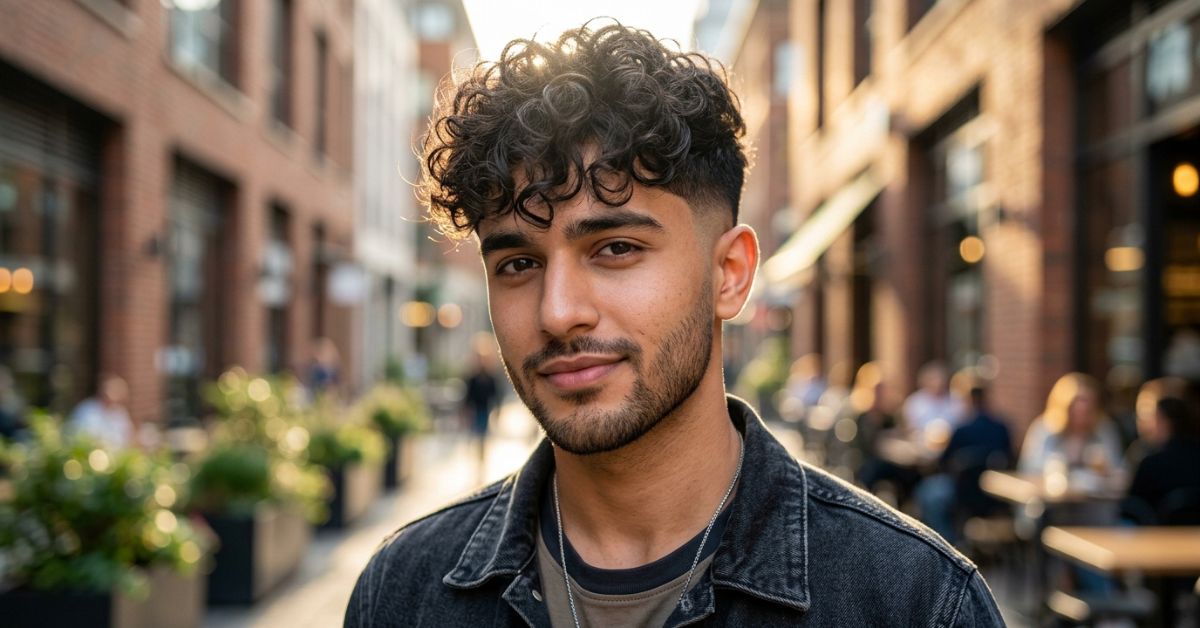
A choppy curly fringe over a tidy taper. Best for oval and square faces. Push the fringe forward and define curls with a little clay.
8. High Taper Fade Black Male (Classic)
Tight coils with volume on top and a precise blend on the sides. Best for oval and square faces. Finger-shape the curls and finish with a light oil.
High Taper Styles for Straight & Fine Hair
9. High Taper Fade Straight Hair
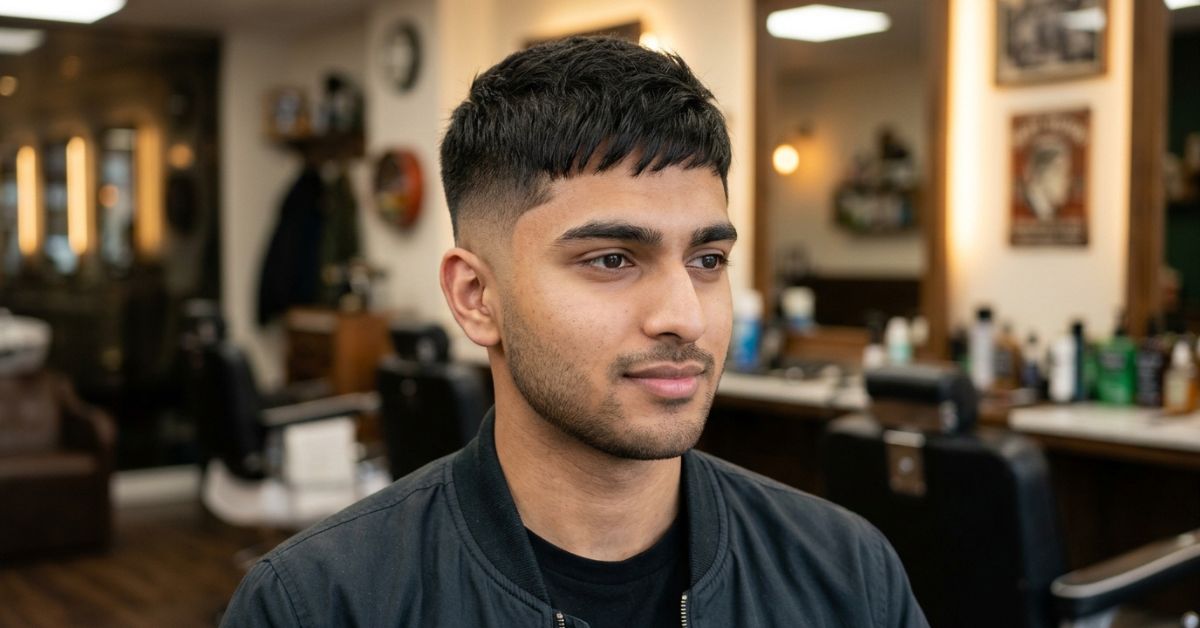
Straight hair brushed back with lift. Best for square and oval faces. Use a round brush while blow-drying and add a little clay.
10. High Taper Fade Side Part
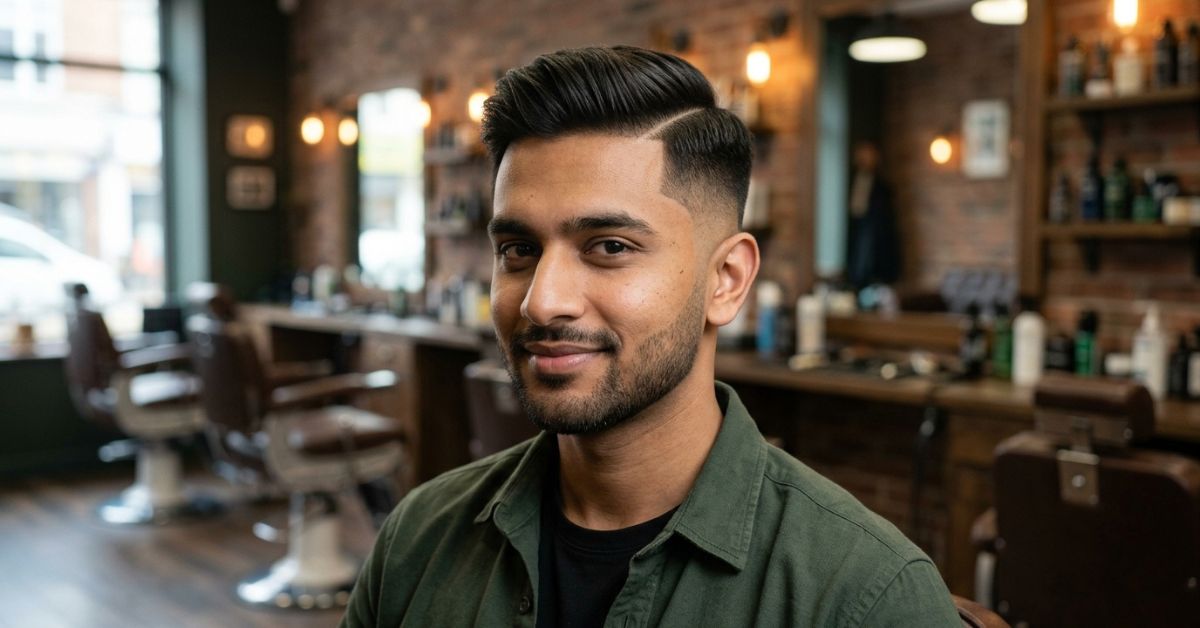
A neat part with short, tapered sides. Works on all face shapes. Dry the hair in the direction of the part, then use pomade.
11. High Taper Fade Slick Back
Hair swept back with a clean taper and tidy nape. Best for oval, diamond, and rectangular faces. Use cream, then a round brush.
12. High Taper Fade Comb Over
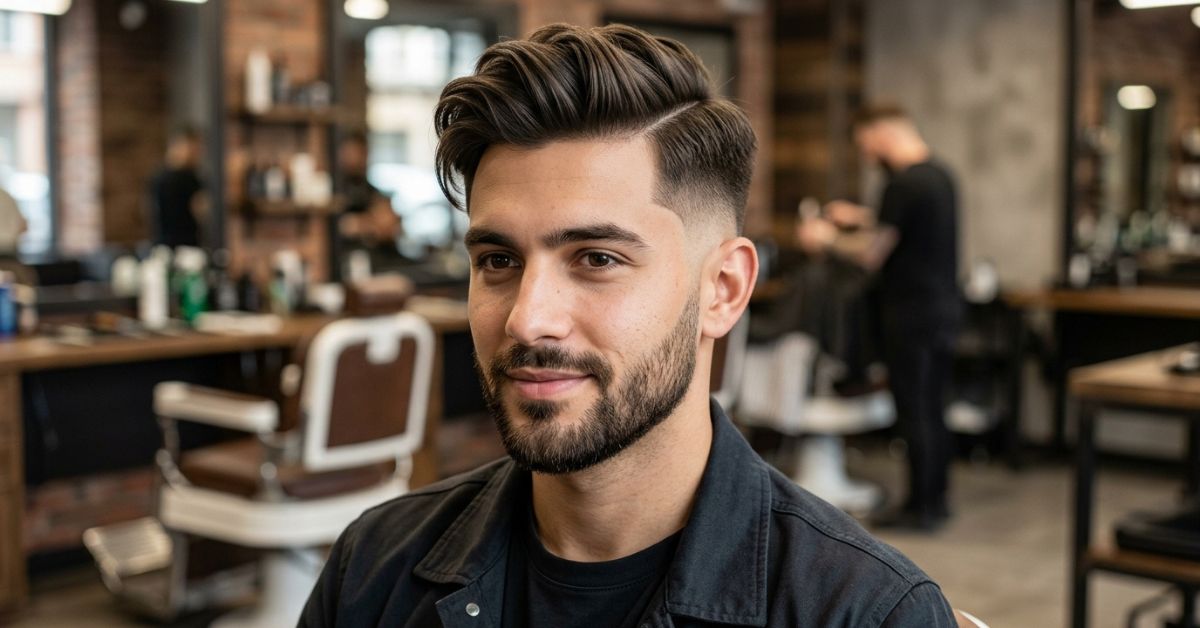
A side-combed top with clear separation. Best for oval, square, and heart faces. Texture powder adds body to fine hair.
13. High Taper Fade Buzz Cut
Short, even length on top with a sharp taper. Best for square and oval faces. A small amount of molding paste adds definition.
14. High Taper Fade Fringe (Straight)
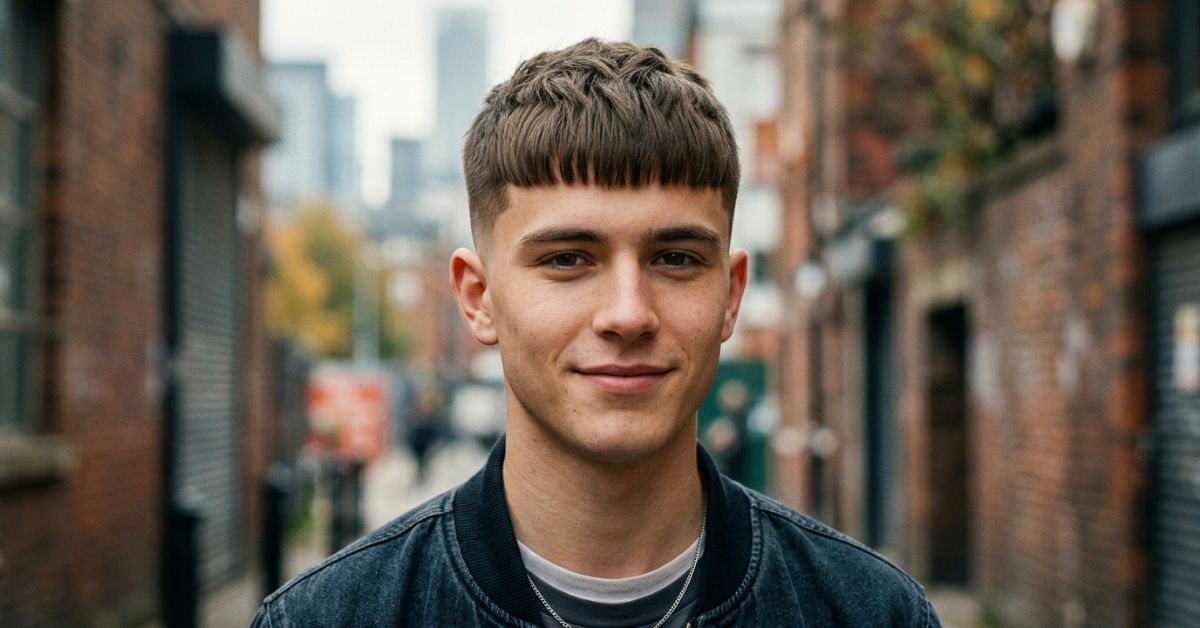
A forward fringe with a tousled finish. Best for round, oval, and diamond faces. Blow-dry forward and set with clay.
15. High Taper Fade Blonde
A textured blonde top with a visible taper gradient. Best for oval and square faces. Use a light paste to keep the finish natural.
High Taper Styles with Bold Statements
16. High Taper Fade Mohawk
A raised center strip with very short sides. Best for oval and square faces. Blow-dry upward and use strong clay.
17. High Taper Fade Mullet
Short tapered sides with length at the back. Best for oval and diamond faces. Finger-shape it so the back flows naturally.
18. High Taper Fade Pompadour
A tall swept-back top over a clean taper. Best for oval, square, and rectangular faces. You need roughly 4 inches on top.
19. High Taper Fade Quiff
A lifted front with a textured finish. Works on all face shapes. Dry forward and up, then set with powder.
20. High Taper Fade Edgar
A blunt fringe with a sharp taper. Best for oval and round faces. Thick, straight hair holds this shape best.
21. High Taper Fade with Design
Razor lines carved into the faded edge. Best for oval and diamond faces. Designs fade fast, so refresh every 1 to 2 weeks.
22. High Taper Fade Asian
A textured top over crisp sides, built around straight, dense hair. Best for oval and heart-shaped faces. Clay adds separation without weight.
23. High Taper Fade with Beard
A short top with a shaped beard that blends into the taper. Best for oval and diamond faces. Ask your barber to connect the beard line to the sideburn.
24. High Top Taper Fade
A tall, structured top with tight sides. Best for oval, square, and round faces. Aim for at least 3 to 4 inches of height.
25. High Taper Fade Long Hair
Long hair with flow over tight sides. Best for oval and diamond faces. Wear it loose or tied back with a little cream.
High Taper Styles with Texture & Detail
26. Textured High Taper Fade
Layered, tousled volume with a tight taper. Best for oval, round, and diamond faces. Finger-style it rather than combing.
27. Short High Taper Fade
Short length all over with a sharp blend. Best for round and diamond faces. Low effort and easy to style.
28. High Taper Fade Haircut (Classic)
A thick, textured top with a clean taper. Best for oval and round faces. Works in casual and semi-formal settings.
29. High Taper Fade Crop
A short, choppy top with a structured edge. Works on all face shapes. Sea salt spray plus matte clay finishes it.
30. High Taper Fade with Braids
Neat braids on top with a skin-tight taper. Best for square and oval faces. Moisturize the scalp and edges regularly.
31. High Taper Fade Man Bun
Long hair tied at the crown with tapered sides. Best for oval and rectangular faces. Apply cream before tying to tame flyaways.
32. High Taper with Textured Fringe
A forward, choppy fringe over a tidy taper. Best for oval and square faces. Fine to medium hair works best.
33. High Taper Fade Spiked
Short, textured spikes with a taper. Best for round faces, since it adds height. Use firm pomade and keep the spikes soft, not rigid.
34. High Taper Fade Brushed Forward
A Caesar-style top with a taper. Works on all face shapes and helps hide receding temples. Use a vent brush and molding paste.
35. High Taper Business Professional
A conservative top with a tight, polished taper. Works on all face shapes. Use light pomade for a natural shine.
How to Choose the Right High Taper Haircut for You
Face shape and hair texture decide which version suits you. Use these as guides, not strict rules.
Which Face Shape Suits a High Taper Best?
High Taper for Round Face
The height lengthens your face. Try a pompadour, quiff, curly top, or high top. Dry hair upward for maximum lift.
High Taper for Oval Face
You can wear almost any version. Textured crops, slick backs, and side parts all work.
High Taper for Square Face
Strong angles suit a sharp taper. Pair it with a groomed beard, a textured crop, or a side part.
High Taper for Heart-Shaped Face
Keep volume moderate and toward the crown. A textured fringe or side part balances a wider forehead.
High Taper for Diamond Face
Keep the top natural and textured. A curly top, fringe, or quiff frames the cheekbones.
High Taper for Rectangular/Oblong Face
Avoid extra height. Choose a short crop, fringe, or side-swept style to shorten the look of your face.
High Taper for Different Hair Types
High Taper for Straight Hair
Straight hair shows crisp lines. Use a dime-sized amount of light pomade or clay. Too much looks greasy.
High Taper for Curly Hair
The taper removes side bulk and lets curls stand out. Apply curl cream to wet hair and avoid touching it once dry.
High Taper for Coily Hair (Type 4)
Moisture matters most. Use a leave-in conditioner, seal with oil, and shape with a pick or sponge.
High Taper for Thick Hair
The taper removes weight from the sides. Use clay or strong pomade to control the top.
High Taper for Fine/Thin Hair
Short sides make the top look fuller. Use texture powder and skip heavy pomades.
How to Ask Your Barber for a High Taper Haircut
Clear instructions prevent most bad haircuts. Phrases like “clean me up” leave too much to chance.
The Golden Rule of Barber Communication
Say exactly what you want, and show it.
- Name the height: “High taper, starting at the temples.”
- Bring photos: front, side, and back, ideally of someone with your hair type.
- Give guard numbers: “A #1 to #2 on the sides.”
- State top length: “About 3 to 4 inches, with texture.”
- Choose a neckline: tapered or blocked.
- Say how close: “Not to skin” or “all the way to skin.”
- Ask for advice: a good barber will flag anything that will not suit your hair.
Clipper Guard Numbers Explained: High Taper Edition
Guard numbers tell your barber how much hair to leave.
| Guard | Length | Typical use |
|---|---|---|
| #0 | About 1/16 inch | Skin or near-skin fades |
| #1 | 1/8 inch (3 mm) | Bold, tight tapers |
| #2 | 1/4 inch (6 mm) | Classic, safe starting point |
| #3 | 3/8 inch (9 mm) | Softer, office-friendly tapers |
Most high tapers use #1 to #2 on the sides. If it is your first one, start with #2. You can always go shorter next time. Barbers blend several guards to get a smooth gradient.
How to Style a High Taper Haircut at Home
A simple routine takes under ten minutes.
4-Step Daily Styling Process
- Prep: Towel-dry until the hair is damp, then add sea salt spray for grip. Wash 2 to 3 times a week, not daily.
- Product: Use curl cream for curls, pomade for slick styles, clay for texture, or powder for volume. A dime-sized amount is enough.
- Blow-dry: Use medium heat and low speed. Use a round brush for quiffs, your fingers for textured looks, and a diffuser for curls.
- Finish: Add powder or light clay for hold. Smooth flyaways with a drop of oil.
Tip: Blow-dry against the direction first, then flip it forward for extra lift.
How to Maintain a High Taper Haircut
Barber Visit Frequency
| Cut | Visit every |
|---|---|
| High taper (no skin) | 2 to 3 weeks |
| High taper fade (skin) | 1.5 to 2 weeks |
| High taper with design | 1 to 2 weeks |
Key Facts:
- A typical cut costs $20 to $60 in the US, depending on city and barber
- A standing appointment every two weeks keeps the shape consistent
- After about 3 weeks, the taper loses definition
- Shape-ups (neckline and edge cleanups) often cost $10 to $15
At-Home Maintenance Between Cuts
- Neckline: Clean stray hairs with a trimmer. Never re-taper the sides yourself.
- Scalp: Use clarifying shampoo weekly and moisturizer 2 to 3 times a week.
- Products: Rotate clay, cream, and powder to avoid buildup.
- Sleep: Use a silk cap or satin pillowcase for waves and curls.
What to Do If Your Taper Grows Out
- Let it grow: A high taper softens into a mid taper in 3 to 4 weeks.
- Edge it up: Trim only the neckline and sideburns.
- Book a shape-up: A 10 to 15 minute cleanup can add a week or two.
Best Hair Products for High Taper Haircuts
Styling Products
- Texture clay: strong hold, matte finish, good for thick hair
- Molding paste: flexible hold for side parts and comb-overs
- Styling cream: smooths frizz on curly and wavy hair
- Pomade: shine and hold for slick backs and formal looks
- Texture powder: instant root lift for fine hair
- Sea salt spray: light grip before styling
Hair Care Products
- Argan oil: hydrates and reduces frizz; use 2 to 3 drops on mid-lengths and ends
- Clarifying shampoo: removes buildup; use weekly and follow with conditioner
- Hydrating conditioner: restores moisture 2 to 3 times a week
- Curl cream: defines curls and keeps them soft
Frequently Asked Questions
What is the difference between a high taper and a low taper?
A high taper starts near the temples for bold height, while a low taper starts above the ears for a subtle, classic look.
How often should I get a high taper haircut?
Every 2 to 3 weeks. Skin fades need a visit every 1.5 to 2 weeks.
How much does a high taper haircut cost?
Most cost $20 to $60 in the US, depending on the barber and location.
Is a high taper fade suitable for formal settings?
Yes. Choose a taper without a full skin fade for law, finance, and other conservative workplaces.
Can a high taper fade help with a receding hairline?
It can. Clean temple lines draw attention to the top, and a brushed-forward style helps most.
What face shapes suit a high taper fade best?
Round, oval, square, and diamond faces suit it best. Rectangular faces should keep the top short.
Which hair types work best with high-taper haircuts?
All of them. Straight hair shows crisp lines, curls gain definition, and thick hair loses bulk.
Can I combine a high taper fade with longer styles on top?
Yes. Pompadours, fringes, curls, man buns, and mullets all pair well because the tight sides add contrast.
Which styling products work best with high-taper haircuts?
Clay for texture, pomade for shine, cream for curls, and powder for volume.
How do I explain my desired high taper to a barber?
Bring photos from three angles and say, “High taper from the temples, #1 to #2 on the sides, 3 inches on top.”
Conclusion
A high taper haircut gives you a clean frame, height, and room to change your top as often as you like. Choose a height and neckline that fit your face, give your barber exact guard numbers, and book a trim every 2 to 3 weeks. Do that, and the cut stays sharp with very little daily effort.

Marco Silva is a fashion writer and content creator at Faxhion Purly, sharing practical insights on clothing, styling, fashion trends, and personal style. With a focus on research and clear communication, Marco creates reader friendly articles designed to help fashion enthusiasts discover useful ideas, understand trends, and make informed style choices.